



What's Happening?
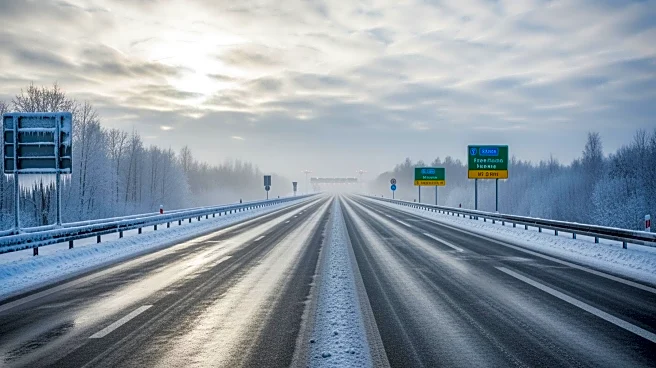
Severe winter weather has caused significant travel disruptions across Northern Europe, including in Copenhagen, Denmark. The adverse conditions have led to major delays at airports and hazardous driving conditions on highways. Snow and ice have grounded
hundreds of flights, leaving over 1,000 passengers stranded overnight at Amsterdam's international airport. The Dutch rail and road networks have also been severely impacted, with fresh snowfall causing delays and cancellations. In Paris, snow has blanketed roads and parks, leading to traffic snarls and the suspension of bus services. French authorities have advised people to work from home and avoid using cars in affected regions. The weather has also affected train services, with Eurostar trains between Paris, London, and Brussels experiencing delays. Even countries accustomed to harsh winter conditions, like Sweden and Finland, have reported disruptions, with trams and buses taken out of service due to the snow.
Why It's Important?
The travel disruptions caused by the winter weather have significant implications for the affected regions. The grounding of flights and delays in train services can have a ripple effect on the economy, affecting businesses and tourism. The inability to transport goods efficiently can lead to supply chain issues, impacting various industries. Additionally, the hazardous road conditions pose safety risks to drivers and can lead to increased accidents and injuries. The situation highlights the vulnerability of transportation infrastructure to extreme weather events and the need for effective contingency planning. The disruptions also underscore the importance of timely communication to travelers to minimize inconvenience and ensure safety.
What's Next?
As the winter weather continues to affect Northern Europe, authorities are likely to focus on clearing snow and ice from critical transportation routes to restore normalcy. Airports and train operators will need to manage the backlog of passengers and reschedule canceled services. Governments may also consider implementing additional measures to enhance the resilience of transportation infrastructure against future weather-related disruptions. Travelers are advised to stay updated on weather forecasts and transportation advisories to plan their journeys accordingly. The situation may prompt discussions on improving winter preparedness and response strategies in the affected regions.