
What's Happening?
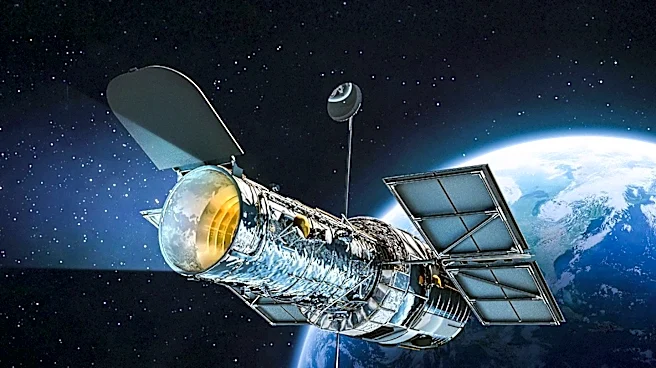
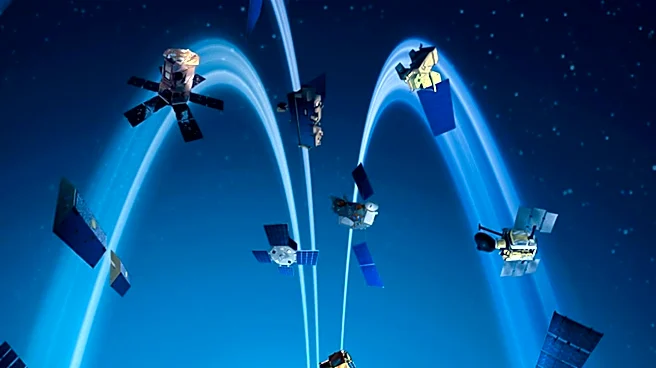
Avi Loeb, a prominent astrophysicist, discusses the impact of Elon Musk's space ventures, particularly SpaceX's Starlink, on astronomical observations. Loeb highlights the potential for light pollution from the increasing number of satellites in low Earth
orbit, which could hinder the search for extraterrestrial life and technological signatures. He emphasizes the need for balance between technological advancement and preserving the night sky for scientific exploration.
Why It's Important?
The proliferation of satellites poses a significant challenge to astronomers, as light pollution can obscure observations of the cosmos. This issue is critical for the scientific community, which relies on clear skies to study celestial phenomena and search for signs of extraterrestrial life. The discussion raises awareness about the need for responsible space exploration practices that consider the long-term impact on scientific research and the environment.
Beyond the Headlines
The debate over light pollution from satellites also touches on broader ethical considerations regarding the commercialization of space and its impact on global scientific efforts. As private companies play an increasingly prominent role in space exploration, there is a growing need for international regulations to ensure that technological advancements do not come at the expense of scientific discovery and environmental preservation.