




What's Happening?
The United States and Iran have agreed to a temporary two-week ceasefire following intense negotiations facilitated by Pakistan. This agreement comes after President Trump set a deadline for Iran to meet specific demands or face severe military consequences.
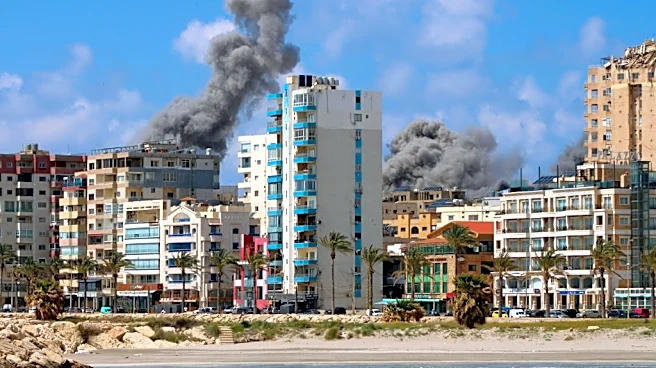
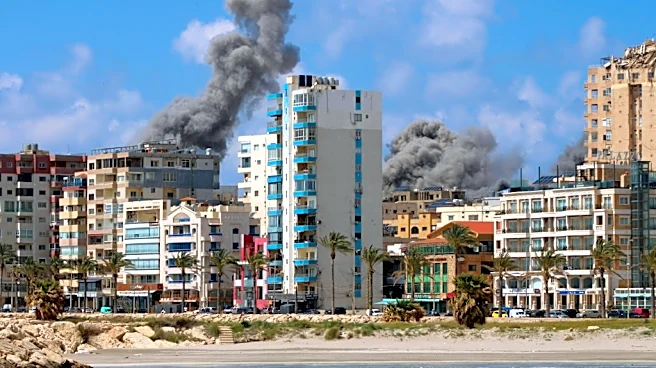
The ceasefire requires Iran to reopen the Strait of Hormuz, a critical waterway for global oil supplies, which had been largely blocked during the conflict. Despite the ceasefire, Israel has continued its military operations against Hezbollah in Lebanon, leading to further regional instability. The ceasefire has led to a significant drop in oil prices and a surge in global stock markets, reflecting relief over the temporary pause in hostilities.
Why It's Important?
The ceasefire is significant as it temporarily alleviates the threat of a broader conflict in the Middle East, which could have severe implications for global energy markets and geopolitical stability. The reopening of the Strait of Hormuz is particularly crucial as it is a vital corridor for oil shipments, and its closure had threatened to disrupt global energy supplies. The agreement also provides a window for diplomatic efforts to address underlying tensions, although the continuation of Israeli attacks on Hezbollah highlights the fragility of the truce. The situation underscores the complex interplay of regional power dynamics and the challenges of achieving lasting peace.
What's Next?
The next steps involve continued diplomatic negotiations, with Pakistan playing a key role as a mediator. Delegations from the U.S. and Iran are expected to meet in Islamabad to discuss a more comprehensive resolution to the conflict. However, the ongoing Israeli military actions and reported attacks in the region suggest that the ceasefire's sustainability is uncertain. The U.S. has indicated that it will impose tariffs on countries supplying weapons to Iran, adding another layer of complexity to the situation. The outcome of these negotiations will be critical in determining the future of U.S.-Iran relations and regional stability.