


What's Happening?
A recent study by the Pew Research Center, conducted as part of the Pew-Knight Initiative, explores how Americans in urban, suburban, and rural communities engage in civic life. The research indicates that while overall engagement rates are broadly similar
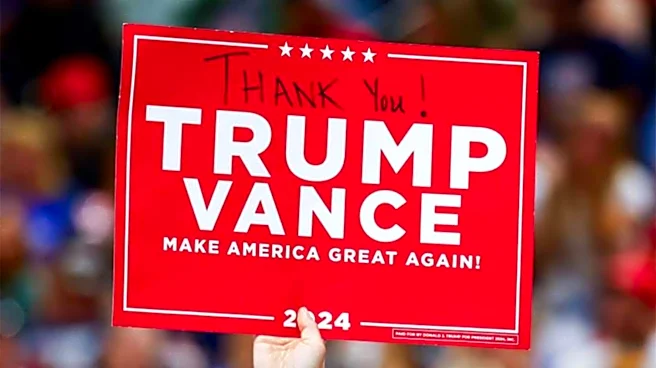
across these areas, there are distinct differences in the types of activities people participate in. For instance, rural Americans are more likely to display political signs or bumper stickers and attend religious services monthly compared to their urban and suburban counterparts. Conversely, urban Americans are more prone to participating in protests, marches, or demonstrations. The study categorized adults into four engagement groups: Mobilizers (highly active), Connectors (involved but less political), Spectators (news consumers), and Outsiders (least involved). Mobilizers and Outsiders constitute similar proportions across all three community types, while suburban residents are slightly more likely to be Connectors, and urban residents are more likely to be Spectators.
Why It's Important?
This research provides valuable insights into the diverse ways Americans participate in society, challenging monolithic views of civic engagement. Understanding these regional differences is crucial for policymakers, community organizers, and political campaigns aiming to effectively reach and mobilize various populations. For example, the higher propensity for rural Americans to engage in visible political displays like signs and bumper stickers suggests different communication strategies might be effective compared to urban areas where protests are more common. The findings also highlight the importance of considering community type alongside other demographic factors like age, income, and political identity when analyzing civic behavior. Recognizing these nuances can lead to more tailored and impactful engagement efforts, fostering stronger community ties and more representative political participation across the nation.
What's Next?
The Pew-Knight Initiative's findings will likely inform future research on civic engagement, prompting deeper dives into the motivations behind these observed differences. Political strategists and advocacy groups may use this data to refine their outreach methods, developing more targeted campaigns that resonate with the specific engagement patterns of urban, suburban, and rural populations. Community leaders might leverage these insights to design programs that encourage participation in ways that align with local preferences, such as promoting in-person group activities in rural areas or facilitating online civic discussions in urban settings. The study's emphasis on the varying forms of engagement could also lead to a broader re-evaluation of what constitutes 'civic participation,' moving beyond traditional metrics to include a wider array of activities.
Beyond the Headlines
The study's revelation that rural Americans' groups are more likely to interact in person, while urban Americans' groups lean towards online interaction, points to a significant cultural and social divergence. This difference in social infrastructure could have profound implications for community resilience, information dissemination, and the formation of collective action. In-person interactions often foster stronger social capital and trust, which can be vital during times of crisis or for sustained community development. Conversely, online engagement offers broader reach and accessibility but may lack the depth of connection found in face-to-face interactions. This divergence suggests that efforts to strengthen civic life must consider the preferred modes of interaction within each community type, ensuring that initiatives are culturally appropriate and effective in building meaningful connections. The findings also subtly underscore the ongoing digital divide and its impact on how different communities access information and participate in public discourse.