



What's Happening?
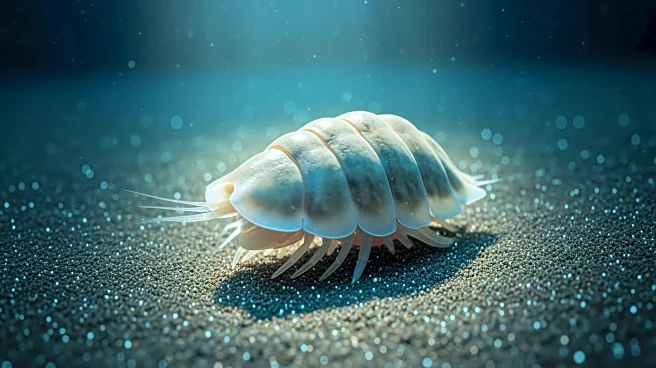
New research has revealed that the deep-sea crustacean Alicella gigantea, previously thought to be rare, is widespread across the ocean floor. The study, led by Dr. Paige J. Maroni and colleagues at the University of Western Australia, compiled 195 records
from 75 locations and performed genetic analyses. The findings show that A. gigantea inhabits nearly 59% of the world's ocean floor, thriving in abyssal and hadal zones of the Pacific, Atlantic, and Indian Oceans. Despite its size and environmental reach, the species exhibits low genetic differentiation globally, suggesting a single species with extreme dispersal capabilities. Modern sampling techniques have been crucial in revealing the abundance of this species.
Why It's Important?
The discovery of Alicella gigantea's widespread presence challenges previous assumptions about deep-sea biodiversity and species scarcity. Understanding the genetic and ecological dynamics of such species is vital for conservation policy, carbon cycling, and global biodiversity assessments. As commercial interest in deep-sea mining grows, it is increasingly important to document the life history and resilience of deep-sea organisms. This research highlights the need for continued exploration and genetic studies to fully understand the biodiversity and adaptation of life in Earth's extreme environments.