





What's Happening?
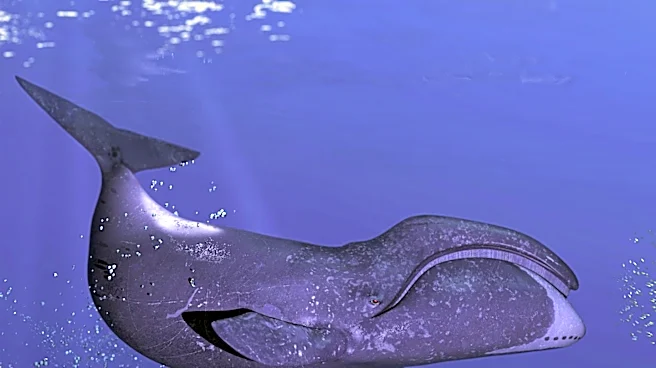
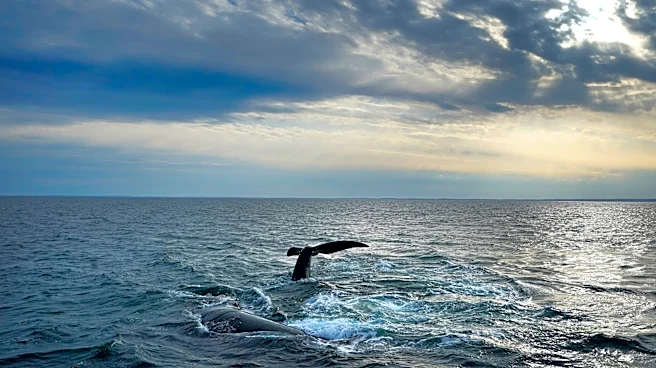
The North Atlantic Right Whale Consortium has released its latest population estimate, indicating a slight decline in the North Atlantic right whale population from a revised 389 individuals in 2024 to 382 in 2025. This change, while within the margin
of uncertainty for the estimate, highlights the ongoing vulnerability of this critically endangered species. Despite the overall decline, the 2025-2026 calving season recorded 24 documented births, the highest number since 2009, with no reported calf deaths. These new births are not yet factored into the 2025 population estimate. Kathleen Collins, Senior Marine Campaigns Manager at the International Fund for Animal Welfare (IFAW), emphasized that for such a small population, the health and survival of every individual are crucial for the species' future.
Why It's Important?
The continued decline, even if slight, in the North Atlantic right whale population underscores the urgent need for sustained and effective conservation measures. This species plays a vital role in marine ecosystems, and its dwindling numbers signal broader environmental health concerns. The U.S. fishing and shipping industries are directly impacted by regulations designed to protect these whales, such as those aimed at preventing fishing gear entanglements and vessel strikes. The success or failure of these conservation efforts has significant implications for the economic activities in coastal regions and the livelihoods of those dependent on marine resources. The potential for new calves offers a glimmer of hope, but their survival hinges on robust protective measures, making this a critical period for the species' recovery.
What's Next?
Conservation efforts will continue to focus on implementing innovative solutions to mitigate threats to the North Atlantic right whale. This includes promoting shore-to-ship AIS messaging to prevent vessel strikes and encouraging the adoption of on-demand fishing gear to reduce entanglements. Continued investment, collaboration with mariners and fishing communities, and effective protections across both U.S. and Canadian waters are deemed essential for the species' long-term recovery. The 24 calves born in the recent calving season represent a significant potential for population growth, and the immediate focus will be on ensuring their survival into adulthood to contribute to a meaningful and lasting recovery for the species.
Beyond the Headlines
The plight of the North Atlantic right whale extends beyond immediate population numbers, touching upon broader ethical and legal considerations regarding human impact on endangered species. The ongoing challenges highlight the complexities of balancing economic activities with environmental protection, particularly in shared marine environments. The need for international cooperation between the U.S. and Canada in conservation efforts underscores the transboundary nature of ecological issues. This situation also prompts a deeper reflection on the effectiveness of current regulatory frameworks and the societal responsibility to protect biodiversity, potentially influencing future environmental policy and the development of sustainable practices in marine industries.