
What's Happening?
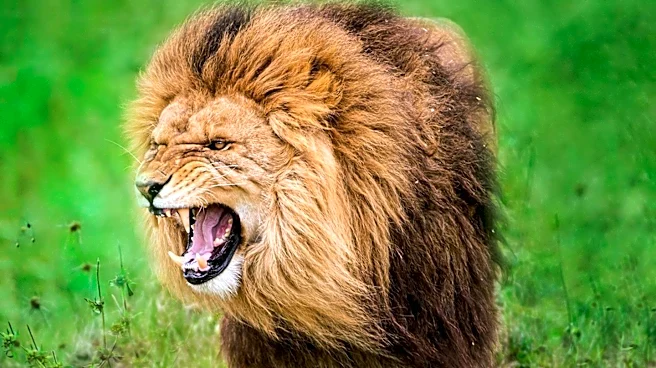
Visitors at the Detroit Zoo recently witnessed an unexpected and aggressive altercation between a male lion and several lionesses within their habitat. The incident, captured on video and shared online
by Detroit Crime Daily, showed the lions biting and fighting with each other, causing concern among onlookers. While the scene appeared alarming, lion experts indicate that such confrontations are a normal part of lion social behavior. These interactions can stem from dynamics related to dominance, territorial disputes, food competition, or pride hierarchy. Despite the intensity of the fight, all animals involved were unharmed. Zoo officials have not released a specific statement regarding this particular incident, but the general understanding is that such events, while rare for public viewing, are natural occurrences within lion prides, even in enclosed environments.
Why It's Important?
This event highlights the complex social structures and natural behaviors of large predators, even when in captivity. For zoo visitors, witnessing such an intense interaction can be both startling and educational, offering a rare glimpse into the raw dynamics of wildlife that are often unseen. It underscores the importance of understanding animal behavior beyond typical docile portrayals, reminding the public that even in controlled environments, wild instincts prevail. For zoos, such incidents, while potentially unsettling for guests, can serve as opportunities to educate the public about animal welfare, behavioral enrichment, and the realities of species conservation. It also implicitly raises questions about how captive environments manage and mitigate potential risks associated with natural animal aggression, ensuring both animal and visitor safety.
What's Next?
While no specific next steps have been announced by the Detroit Zoo regarding this particular incident, it is likely that zoo staff will continue to monitor the pride's dynamics closely. Zoos typically have established protocols for observing animal behavior and intervening if aggression escalates to a point where injury is likely. Educational efforts might be enhanced to inform visitors about lion social structures and the natural reasons behind such confrontations, helping to contextualize these events. For the public, similar videos may continue to surface as more visitors capture and share unexpected animal behaviors, potentially sparking broader discussions about animal welfare in zoos and the balance between natural behavior and visitor experience.
Beyond the Headlines
Beyond the immediate spectacle, this incident touches upon deeper themes concerning the representation of wildlife in captivity. Zoos often strive to present animals in a way that fosters appreciation and conservation, sometimes inadvertently sanitizing the more aggressive or challenging aspects of their natural lives. Witnessing a lion fight can challenge preconceived notions of zoo animals as purely docile creatures, forcing a confrontation with the wildness that remains inherent in them. This can spark ethical discussions about the role of zoos in showcasing the full spectrum of animal behavior, including its more violent aspects, and how to do so responsibly. It also subtly reinforces the idea that even in controlled settings, the unpredictable nature of wildlife persists, offering a powerful, albeit sometimes unsettling, educational experience.