









What's Happening?
Ukraine’s Zaporizhzhia Nuclear Power Plant (ZNPP) has lost its last remaining external power line, marking the 27th such incident since the conflict began. According to the International Atomic Energy Agency (IAEA), the plant is now relying on emergency
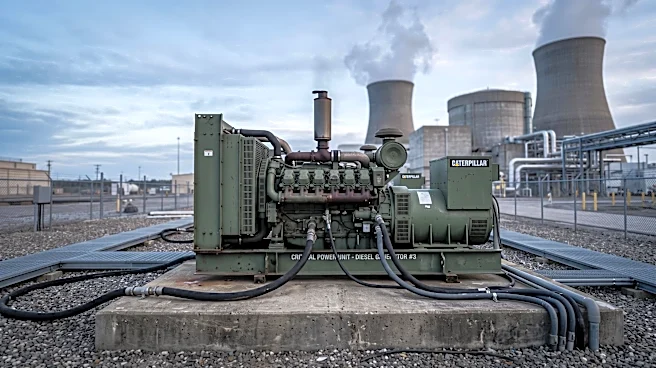
diesel generators to maintain essential safety functions, including reactor cooling. The connection to its only remaining external power line, Ferosplavna-1, was lost early Sunday morning. IAEA Director General Rafael Grossi stated that this outage highlights the facility’s "continued precarious nuclear safety situation." The cause and exact location of the disconnection have not yet been determined. Information provided to the IAEA team stationed at the plant indicates that current fuel reserves are sufficient to operate a limited number of these emergency diesel generators for approximately two weeks.
Why It's Important?
The repeated loss of external power at the Zaporizhzhia Nuclear Power Plant poses a significant nuclear safety risk. Nuclear power plants require a stable external power supply to cool their reactors and maintain other critical safety systems. When external power is unavailable, plants must rely on backup diesel generators, which are designed for emergency use and have limited fuel reserves. The 27th such incident underscores the fragility of the plant's operational environment amidst ongoing conflict. A prolonged reliance on diesel generators, especially if fuel supplies are disrupted or exhausted, could lead to a catastrophic failure of cooling systems, potentially resulting in a nuclear accident with severe environmental and humanitarian consequences. This situation impacts not only Ukraine but also neighboring regions, raising international concerns about nuclear safety and security.
What's Next?
IAEA Director General Rafael Grossi has emphasized the critical importance of restoring the Zaporizhzhia Nuclear Power Plant's connection to the electricity grid and increasing its diesel fuel reserves. The IAEA team on-site will continue to monitor the situation and work towards ensuring the plant's nuclear safety. International efforts will likely focus on de-escalating the conflict around the plant to prevent further damage to its infrastructure and to facilitate the stable supply of external power and fuel. The international community, including the United Nations, will likely continue to press for a demilitarized zone around the plant to safeguard its operations and prevent a potential nuclear disaster. The duration of the current diesel fuel reserves, estimated at two weeks, creates an urgent timeline for resolution.
Beyond the Headlines
The recurring power outages at the Zaporizhzhia Nuclear Power Plant highlight the broader implications of armed conflict on critical civilian infrastructure, particularly those with high-risk potential like nuclear facilities. This situation raises profound questions about international humanitarian law and the protection of such sites during wartime. The reliance on emergency systems for extended periods can degrade their reliability and increase the risk of human error under stress. Beyond the immediate safety concerns, the instability at ZNPP could set a dangerous precedent for the vulnerability of nuclear installations in conflict zones globally, prompting a re-evaluation of international protocols for nuclear safety and security in such circumstances. The long-term environmental and health impacts of a potential nuclear incident would be devastating, extending far beyond national borders.