



What's Happening?
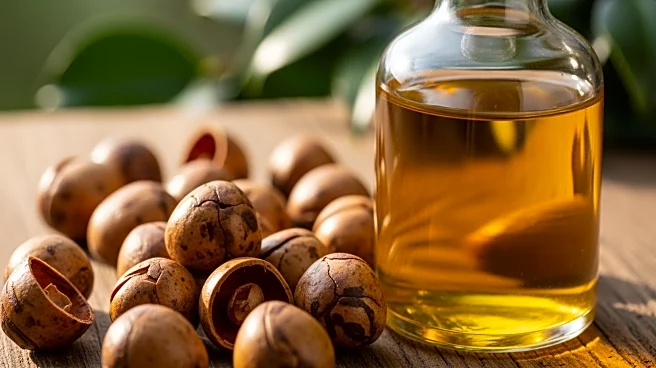
China has significantly increased its camellia oil production, achieving a 53% rise since 2020, now producing 1.1 million metric tons annually. This growth is part of a strategic effort to reduce reliance on imported edible oils, as the country currently
imports over 10 million tons annually. The expansion involved a three-year project to increase specialized forest areas by 787,000 hectares and transform low-yield plantations. The National Forestry and Grassland Administration has implemented a 2023-25 action plan to further boost production, aiming to expand plantation areas and enhance production capacity. Subsidies have been introduced to support these initiatives, with a focus on creating model production zones.
Why It's Important?
This development is crucial for China's agricultural and economic strategy, as it seeks to enhance self-reliance in essential commodities. By increasing domestic production of camellia oil, China aims to reduce its vulnerability to global market fluctuations and supply chain disruptions. The initiative also supports rural development and economic diversification, providing new opportunities for local farmers and businesses. Additionally, the focus on high-quality production and integrated development models could lead to increased competitiveness in the global market. This move aligns with China's broader goals of sustainable development and economic resilience.