


What's Happening?
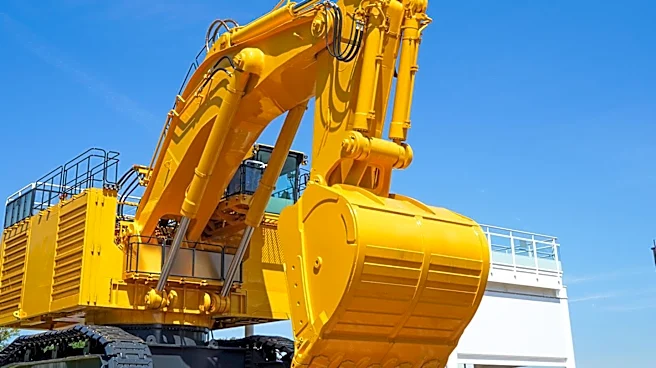
A German team has developed a remote-controlled excavator designed to retrieve 126,000 corroding drums of nuclear waste from the Asse II salt mine in Lower Saxony. The mine, which has been taking on brine since 1988, was initially chosen for its geological
properties, believed to naturally contain waste. However, the mine's stability has been compromised, leading to a legal mandate to retrieve all waste. The excavator, built by Bilfinger and the Fraunhofer Institute, is ready but cannot be deployed until a new shaft, Asse 5, is constructed. This shaft is crucial for transporting the machinery underground, but its construction is not expected to begin until 2031, with completion anticipated by 2039.
Why It's Important?
The delay in retrieving nuclear waste from Asse II highlights the complexities and challenges of nuclear waste management. The situation underscores the importance of thorough planning and infrastructure development in handling radioactive materials. The inability to proceed with waste retrieval until the new shaft is completed poses environmental and safety risks, as the mine continues to take on water. This case serves as a cautionary tale for other countries managing nuclear waste, emphasizing the need for robust and adaptable waste management strategies.
What's Next?
The focus will be on the construction of the Asse 5 shaft, which is critical for the retrieval process. Until then, the excavator will remain unused, and the waste will stay underground. The German government and involved agencies must ensure that the shaft construction proceeds without further delays to mitigate environmental risks. Additionally, ongoing monitoring of the mine's stability and brine levels will be essential to prevent potential flooding, which could halt the retrieval process entirely.