






What's Happening?
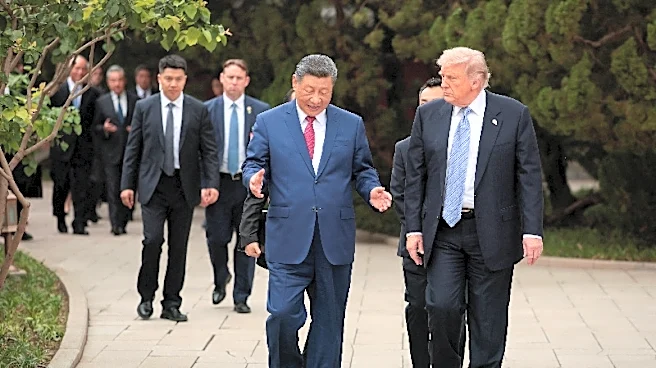
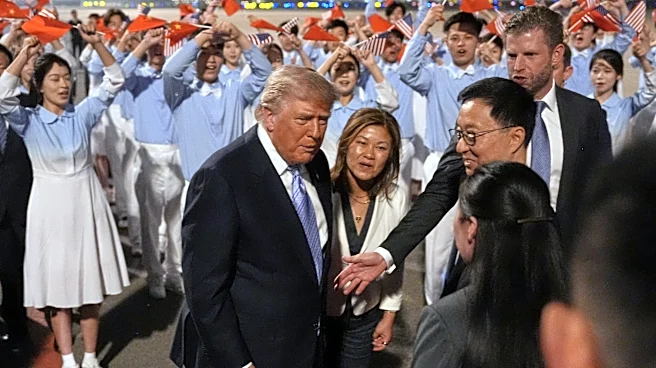
During a recent visit to China, President Trump engaged in discussions with Chinese President Xi Jinping, focusing on Taiwan and the broader U.S.-China relationship. The talks were marked by Xi's warning against U.S. mishandling of Taiwan relations, which
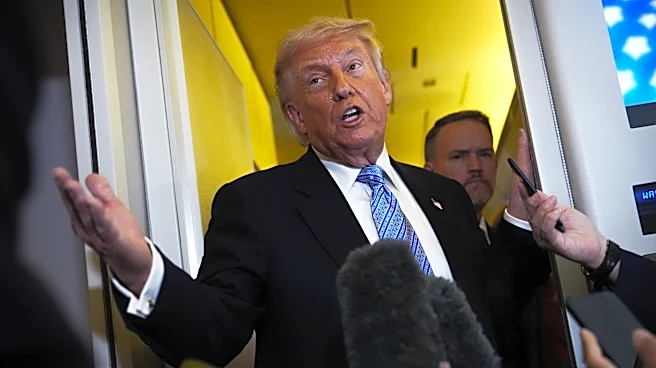
could lead to conflict. While in Beijing, Trump refrained from public comments on Taiwan but later suggested reconsidering a planned U.S. arms sale to Taiwan. The trip also covered trade and the U.S.-Israel conflict with Iran. Despite Trump's overt flattery towards Xi, the Chinese leader did not reciprocate. The visit concluded with both leaders agreeing on a 'constructive' framework for managing bilateral issues, though details remain sparse.
Why It's Important?
The discussions between President Trump and Xi Jinping are crucial in shaping the future of U.S.-China relations, particularly concerning Taiwan. The potential reconsideration of the arms package to Taiwan could signal a shift in U.S. policy, impacting regional security dynamics. Taiwan's status remains a sensitive issue, with implications for U.S. strategic interests in Asia. The summit's outcomes may influence global trade, given the economic interdependence of the U.S. and China. Additionally, the handling of the Iran conflict and its economic repercussions were significant topics, with potential impacts on global oil markets and geopolitical stability.
What's Next?
The U.S. administration may continue to evaluate its arms sales policy to Taiwan, balancing strategic interests with diplomatic relations with China. Further negotiations on trade and security issues are likely, as both nations seek to manage their complex relationship. The international community will closely monitor developments, particularly any changes in U.S. policy towards Taiwan. The outcomes of these discussions could influence future diplomatic engagements and economic agreements between the two superpowers.