







What's Happening?
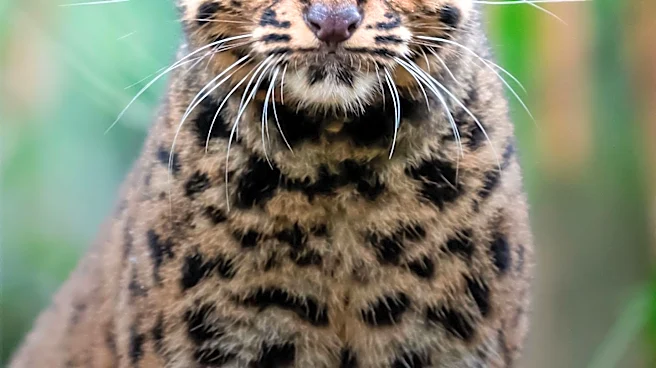
A previously unknown wildcat species, Leopardus tilcayo, has been identified in Bolivia. This discovery, detailed in a study co-led by Bolivian biologist Paola Nogales-Ascarrunz and published in Current Biology, marks the first formal description of a living
cat species in over a century. The identification was made possible through advanced genomic tools, which revealed genetic diversity not apparent through physical characteristics alone. The cat, smaller than a domestic cat with a scrunched-up face, round ears, and leopard-like spots, was initially thought to be an unusual variant of Leopardus tigrinus. However, distinct rosette patterns on its coat and comprehensive genomic sequencing of 38 individuals across the Leopardus genus confirmed it as a separate lineage. The research involved a collaboration with geneticist Eduardo Eizirik and evolutionary biologist Jonas Lescroart, utilizing both modern samples and historical museum specimens to construct detailed family trees of tiger cats.
Why It's Important?
The identification of Leopardus tilcayo significantly impacts conservation efforts and the understanding of biodiversity. Previously, small spotted tiger cats across Central and South America were grouped as a single species, Leopardus tigrinus, leading to an overestimation of their population size and security. By splitting this single species into six distinct lineages, the new study reveals that each group has a smaller range and fewer individuals, increasing their individual risk profiles. Genomic data indicates that nearly every lineage, including the tilcayo, has been in long-term decline, with the tilcayo's population estimated to be down 63% from historical highs. This reclassification highlights the precarious status of these populations, many of which are still listed under a single IUCN listing, likely underestimating their true vulnerability. The discovery underscores the critical role of genomic analysis in accurate species classification and effective conservation strategies.
What's Next?
The discovery of Leopardus tilcayo necessitates a re-evaluation of conservation strategies for tiger cat populations across Central and South America. Researchers will likely focus on conducting more detailed studies on the newly identified species, including its population size, diet, reproductive habits, and specific threats within its limited range in Bolivia's Yungas forest. This region faces significant pressure from deforestation, gold mining, and agricultural expansion. The approach of combining whole-genome sequencing with DNA from museum specimens, termed 'museomics,' is expected to be applied to uncover more hidden cat species in other regions like South America, Africa, and Asia. This will lead to a more accurate understanding of global cat diversity and inform more targeted and effective conservation interventions by organizations and governments.
Beyond the Headlines
The identification of Leopardus tilcayo transcends a mere biological discovery; it challenges long-held assumptions in taxonomy and highlights the limitations of relying solely on phenotypic data for species classification. The study reveals ancient interbreeding between now-separate species, indicating a complex evolutionary history where genetic material was exchanged across lineages. This genetic 'scrambling' underscores the dynamic nature of speciation and the intricate web of life. Furthermore, the unexpected genetic closeness between Peruvian tiger cats and the Guiana Shield population, despite vast geographic separation, suggests ancient migratory routes or environmental conditions that differ significantly from the modern landscape. This finding opens new avenues for paleogeographical and ecological research, potentially reshaping our understanding of historical animal distributions and environmental changes. The ethical implications of conservation also come to the forefront, as the reclassification demands a more nuanced and localized approach to protecting endangered species.