




What's Happening?
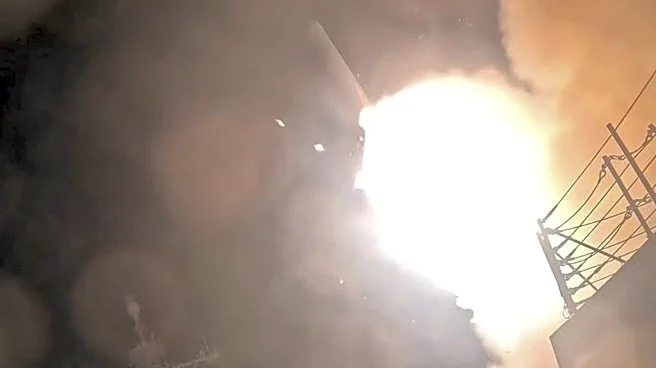
President Donald Trump has declared that the United States will retaliate against Iran by targeting its bridges and power plants for every attack on ships in the Strait of Hormuz. This announcement was made via a Truth Social post, emphasizing that any
form of attack by Iran, whether by missile, rocket, or drone, will prompt a U.S. response. The statement comes amid heightened tensions and military engagements in the region, with the U.S. aiming to secure the strategic waterway. The conflict has already resulted in casualties, including the deaths of U.S. service members, and has raised concerns about the potential for further escalation.
Why It's Important?
The Strait of Hormuz is a critical chokepoint for global oil transportation, and any disruption can have significant economic repercussions worldwide. The U.S. strategy of targeting civilian infrastructure in response to military actions raises ethical and legal questions, as such actions are generally prohibited under international law unless the infrastructure is used for military purposes. The ongoing conflict and threats of retaliation could lead to increased instability in the Middle East, affecting global energy markets and international relations. The situation also poses a risk to U.S. allies in the region, who may be drawn into the conflict.
What's Next?
The U.S. and Iran are likely to continue their military posturing, with the potential for further strikes and counterstrikes. Diplomatic efforts may be necessary to de-escalate the situation and prevent a broader conflict. The international community, including the United Nations, may seek to mediate and facilitate negotiations to address the underlying issues. The U.S. administration may also face domestic political pressures to manage the conflict effectively, especially with upcoming midterm elections.