







What's Happening?
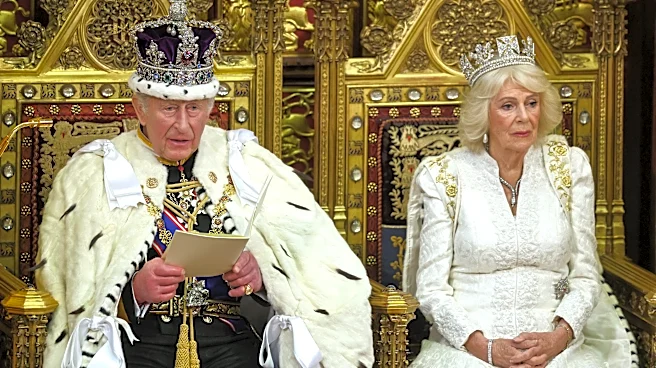
Queen Camilla has revealed the personal struggle she faced in keeping King Charles' cancer diagnosis private. She expressed a strong desire to share the news but was unable to, acknowledging the profound gravity of the situation. During a visit to the Sir
Robert Ogden Macmillan Cancer Centre, she empathized with other patients and their families, noting that her husband's diagnosis provided her with a new perspective on the work of cancer support organizations. King Charles, in turn, has been remarkably open about his health, a departure from previous monarchs, and has indicated that cancer awareness will be a key focus of his reign. His daughter-in-law, the Princess of Wales, has also adopted a candid approach regarding her own health battles.
Why It's Important?
While this news primarily concerns the British Royal Family, it holds broader significance by highlighting the universal challenges associated with serious health diagnoses, particularly the emotional burden on family members tasked with maintaining privacy. Queen Camilla's comments underscore the human aspect of public figures facing private health crises, fostering a sense of relatability and empathy among the public. King Charles' decision to openly discuss his cancer diagnosis is a significant move that could destigmatize the disease and encourage more open conversations about cancer globally, including within the U.S. healthcare landscape. This transparency from a prominent international figure can influence public discourse and potentially inspire greater advocacy for cancer research and patient support services, impacting how such health issues are perceived and addressed across various societies.
What's Next?
King Charles is expected to continue his public engagement with cancer awareness initiatives, potentially using his platform to advocate for increased research funding and improved patient care. His ongoing transparency, alongside that of the Princess of Wales, could set a new precedent for how public figures manage and communicate personal health challenges, potentially influencing other leaders and celebrities to be more open. This could lead to a broader societal shift towards destigmatizing serious illnesses and encouraging more proactive health discussions. Organizations like the Sir Robert Ogden Macmillan Cancer Centre, which Queen Camilla visited, may see increased support and attention as a result of the royal family's public engagement with cancer, potentially leading to expanded services and greater public awareness campaigns.
Beyond the Headlines
The candidness of King Charles and Queen Camilla regarding his cancer diagnosis transcends typical royal news, touching upon deeper societal implications. Their openness challenges historical norms of royal privacy and could contribute to a global movement towards greater transparency in health matters. This shift can empower individuals to discuss their own health struggles more freely, reducing the stigma often associated with serious illnesses. Furthermore, the royal family's public stance on cancer could influence public health policies and funding priorities in various countries, including the U.S., by drawing attention to the pervasive nature of the disease and the critical need for support and research. It highlights the ethical considerations of privacy versus public awareness when prominent figures face health crises, potentially shaping future discourse on public health communication.