







What's Happening?
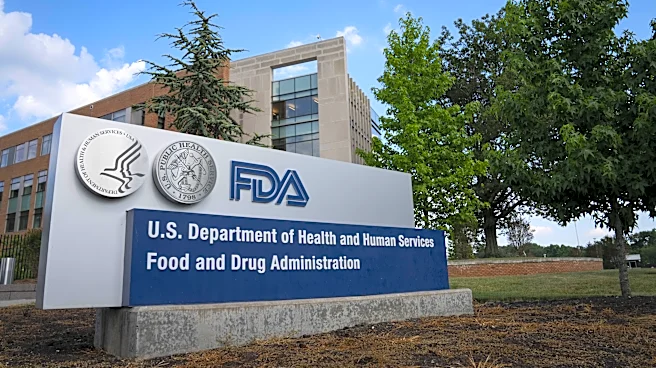
The U.S. Food and Drug Administration (FDA) is preparing to release draft guidance on generative AI in medical devices in the coming months. This announcement follows a discussion paper on regulatory approaches to generative AI-enabled medical devices,
for which the comment period closed on October 19, 2026, receiving over 500 submissions. Rick Abramson, director of the Digital Health Center of Excellence for the FDA, indicated that generative AI policy is a top priority for the administration, including the White House. The feedback gathered will be instrumental in shaping the FDA's regulatory strategy for this rapidly evolving technology. The agency is also prioritizing guidance related to risk assessment and evidence generation for generative AI-enabled devices, and is working to finalize guidance on AI-enabled medical devices drafted in early 2025.
Why It's Important?
The FDA's proactive approach to regulating generative AI in medical devices is crucial for ensuring patient safety and fostering responsible innovation in the healthcare sector. Generative AI, with its ability to create new data, images, or text, presents unique challenges and opportunities in medical diagnostics, treatment planning, and drug discovery. Clear regulatory guidance will provide developers with a framework for designing, testing, and deploying these advanced AI systems, ensuring their reliability, accuracy, and ethical use. This move is vital for building trust among healthcare providers and patients, preventing potential harms from unvalidated AI applications, and accelerating the safe adoption of beneficial AI technologies that could revolutionize medical care.
What's Next?
The upcoming draft guidance from the FDA will mark a significant step in establishing a regulatory pathway for generative AI in medical devices. Following its release, there will likely be another period for public comment, allowing stakeholders to provide further input. The FDA's focus on risk assessment, evidence generation, and post-market monitoring, as highlighted by Abramson, suggests a comprehensive regulatory framework. Additionally, the agency's prioritization of AI-enabled devices for mental health conditions indicates a targeted approach to address specific areas of high need and potential impact. The collaboration with international regulators, such as the UK's MHRA, also suggests a potential for harmonized global standards in AI medical device regulation.
Beyond the Headlines
The regulation of generative AI in medical devices extends beyond technical compliance; it delves into profound ethical considerations regarding algorithmic bias, data privacy, and the ultimate responsibility for AI-driven medical decisions. As AI systems become more autonomous and capable of generating novel content, questions arise about the transparency of their decision-making processes and the potential for unintended consequences. The FDA's guidance will likely address these issues, aiming to ensure that AI tools augment, rather than diminish, human oversight and ethical accountability in healthcare. This regulatory effort will also influence the development of AI education and training for medical professionals, preparing them to effectively and ethically integrate these advanced technologies into clinical practice.