



What's Happening?
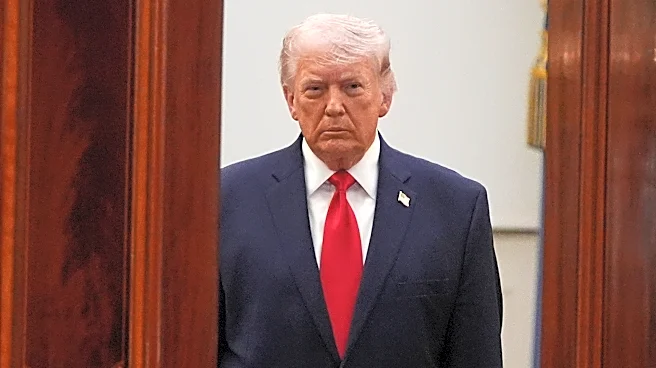
President Donald Trump and Defense Secretary Pete Hegseth have criticized the UK's Royal Navy, questioning its capabilities amid the ongoing conflict with Iran. This criticism follows UK Prime Minister Keir Starmer's initial refusal to allow US military
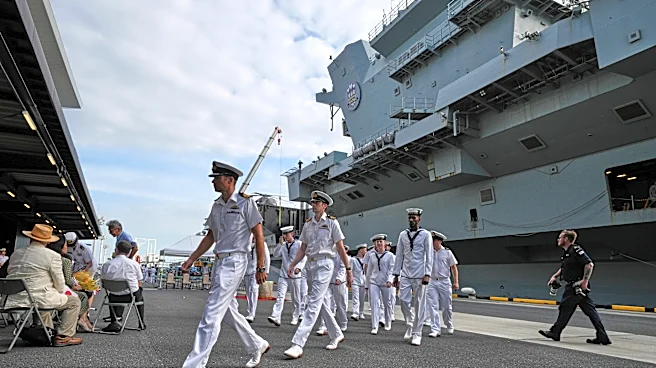
access to British bases, a decision that was later partially reversed. Trump has disparaged the Royal Navy's aircraft carriers, calling them 'toys,' and questioned the UK's naval strength. Despite these remarks, the Royal Navy is undergoing a period of growth, with plans to increase defense spending significantly. The UK aims to raise its defense budget to 3.5% of GDP by 2035, aligning with NATO goals.
Why It's Important?
The criticism from President Trump highlights ongoing tensions between the US and UK regarding military cooperation and defense capabilities. The Royal Navy, once a dominant global force, has seen reductions in its fleet size over the years. However, the UK's commitment to increasing defense spending indicates a strategic shift in response to global security challenges. This development is crucial for NATO's future, as it underscores the need for member nations to reassess their military contributions and capabilities. The UK's defense strategy will likely influence its role within NATO and its relationship with the US.
What's Next?
The UK is expected to continue its defense spending increase, potentially leading to a stronger naval presence in international waters. This could enhance the UK's ability to participate in global security operations and support NATO initiatives. However, the economic impact of the Iran conflict may challenge the UK's ability to meet its defense spending goals. The ongoing dialogue between the US and UK will be critical in shaping future military cooperation and addressing any strategic differences.