





What's Happening?
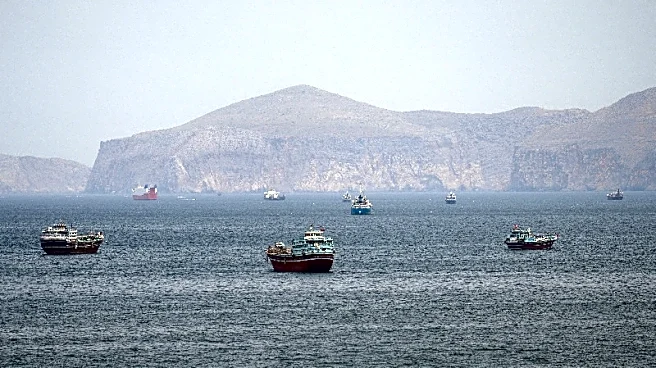
Iran is in discussions with Oman to establish a permanent toll system for maritime traffic through the Strait of Hormuz. This move aims to formalize Iran's control over the strategic waterway, which is crucial for global oil and gas supplies. The Iranian
ambassador to France, Mohammad Amin-Nejad, emphasized the need for a transparent system to manage navigation and security services in the strait. The proposal comes amid ongoing tensions between Iran and the US, with the latter opposing any tolling system. The strait has been a focal point in the US-Israeli conflict with Iran, leading to disruptions in maritime traffic and increased energy prices.
Why It's Important?
The Strait of Hormuz is a vital chokepoint for the global energy market, handling a significant portion of the world's oil and liquefied natural gas supplies. Iran's control over the strait and the proposed toll system could have far-reaching implications for international trade and energy security. The US and its allies view the tolling system as a threat to free navigation and a potential escalation of geopolitical tensions. The situation underscores the strategic importance of the strait and the need for diplomatic solutions to ensure stability in the region. The outcome of these discussions could impact global energy prices and international relations.
What's Next?
Negotiations between Iran and Oman will continue as they seek to implement the toll system. The US and other countries may engage in diplomatic efforts to prevent the establishment of the toll, citing concerns over international maritime law and regional stability. The situation could lead to further diplomatic tensions or potential military confrontations if unresolved. The international community will closely monitor developments, as any changes in the control of the strait could have significant economic and political consequences. The outcome of these talks may influence future policies on maritime security and international trade routes.