
What's Happening?
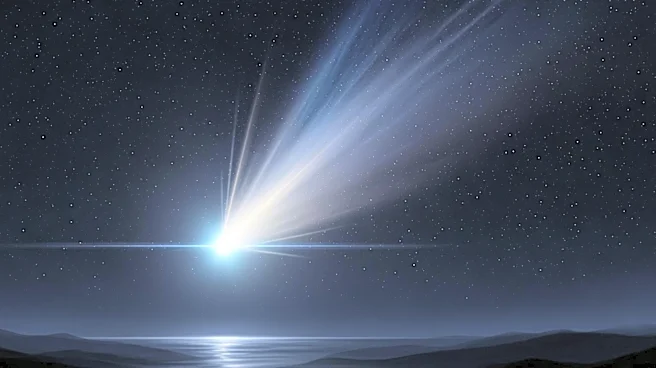
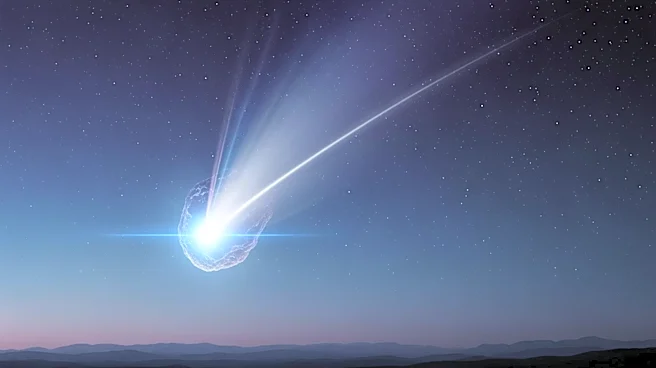
Comet C/2025 R3, known as Comet PanSTARRS, is currently visible in the sky before sunrise and is expected to brighten as it approaches its closest point to the sun, known as perihelion, on April 19-20.
The comet was discovered in September 2025 by the Pan-STARRS survey in Hawaii and has an orbital period of approximately 170,000 years. It will make its closest approach to Earth on April 27, passing at a distance of 45.5 million miles. The best time to view the comet is approximately 90 minutes before sunrise in the lower eastern sky, and it may become visible to the unaided eye in very dark skies, although binoculars are recommended for most observers.
Why It's Important?
The appearance of Comet PanSTARRS offers a rare opportunity for astronomers and the general public to observe a celestial event that occurs only once every 170,000 years. This event provides valuable data for scientists studying the composition and behavior of comets, which are remnants from the early solar system. For amateur astronomers and skywatchers, it is a chance to witness a natural spectacle that can inspire interest in astronomy and science. The comet's visibility also highlights the importance of ongoing astronomical surveys and research in discovering and tracking celestial objects.
What's Next?
As Comet PanSTARRS continues its journey, it will reach its maximum brightness around its closest approach to Earth on April 27. Observers are encouraged to take advantage of clear skies and minimal light pollution to view the comet. Astronomers will continue to monitor the comet's path and brightness, providing updates and guidance for optimal viewing conditions. The data collected during this period will contribute to a better understanding of cometary behavior and the dynamics of the solar system.