




What's Happening?
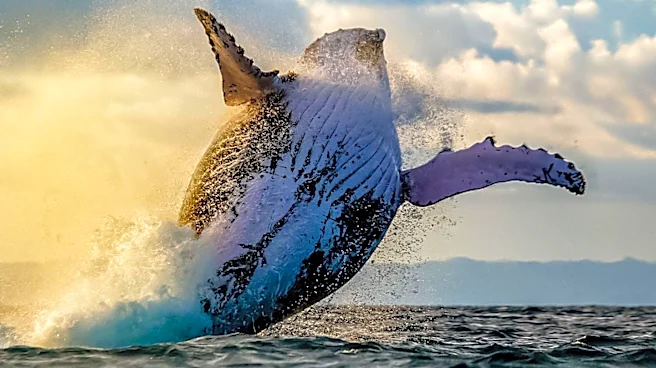
A family in Southeast Alaska experienced a harrowing incident when their sailboat was struck by a humpback whale in Glacier Bay, causing it to sink. Tania Lewis, a wildlife biologist for Glacier Bay National Park, was aboard with her husband and 23-year-old
child when the collision occurred. The family was asleep when the whale hit the boat, prompting a rapid evacuation. They managed to reach shore by swimming and using a dinghy, despite the vessel sinking quickly. The incident highlights the rare but possible danger of whale collisions in the area, which Lewis noted is usually not a significant concern.
Why It's Important?
This incident underscores the unpredictable nature of wildlife interactions in marine environments, particularly in regions like Glacier Bay where human and wildlife activities intersect. The event raises awareness about the potential risks of boating in whale-populated waters, emphasizing the need for preparedness and safety measures. It also highlights the importance of understanding marine wildlife behavior to prevent similar occurrences. The family's survival story serves as a reminder of the resilience and preparedness required when navigating remote and wildlife-rich areas.
What's Next?
Following the incident, there may be increased discussions on boating safety and wildlife interaction protocols in Alaska. Authorities and marine biologists might investigate further to understand the whale's behavior and prevent future incidents. The family plans to assess the damage to their boat and decide on repairs, while also reflecting on the experience and the beauty of Alaska's natural environment.