




What's Happening?
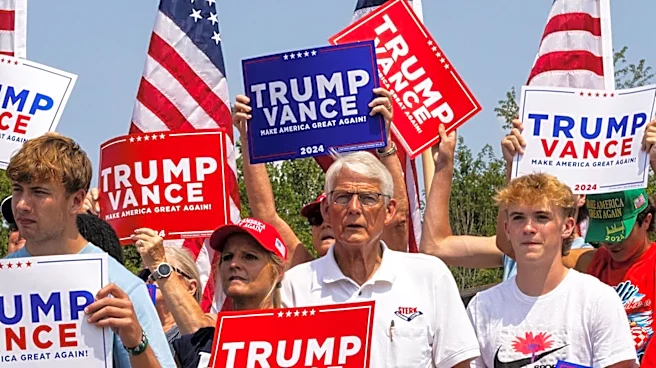
U.S. Rep. Madeleine Dean, a Democrat from Pennsylvania, has expressed significant disappointment with Democratic U.S. Sen. John Fetterman's recent actions, particularly his participation in a Republican midterm convention. Dean, who previously had a close
relationship with Fetterman, criticized his appearance in a convention video as a 'stunt' and highlighted what she perceives as a shift in his values. She specifically pointed to his decisions to back President Trump's policies and his 'blind support' of Israeli Prime Minister Benjamin Netanyahu's actions in Gaza. Dean also raised concerns about Fetterman's work ethic, his lack of participation and caucusing with Democrats, and his inactivity on committees, contrasting it with his alignment with President Trump. She noted that her constituents in suburban Philadelphia are 'livid' over Fetterman's behavior, especially those who campaigned for him. Dean's comments were made during a news conference near the Republican convention, which she described as a 'farce.'
Why It's Important?
This development is important as it highlights growing internal divisions within the Democratic Party, particularly concerning the political alignment and actions of Sen. John Fetterman. Rep. Dean's strong criticism underscores a potential fracturing of support for Fetterman among his Democratic colleagues and constituents, which could have implications for future elections and party unity. His perceived shift towards supporting President Trump's policies and his stance on international issues like the conflict in Gaza could alienate traditional Democratic voters and create challenges for the party in Pennsylvania. The situation also brings into focus the role of individual lawmakers in shaping party narratives and the potential consequences when their actions diverge from established party lines. The 'livid' reaction from constituents suggests a significant disconnect between Fetterman's current political trajectory and the expectations of his base, potentially impacting his political viability in the long term.
What's Next?
The immediate future will likely see continued scrutiny of Sen. Fetterman's political actions and statements, particularly his engagement with Republican events and his positions on key policy issues. Other Pennsylvania Democrats, such as U.S. Rep. Chris Deluzio, have already indicated a willingness to challenge Fetterman in future elections, suggesting that his seat could become a point of contention within the party. Voters will be closely watching to see if Fetterman adjusts his approach in response to the criticism from his Democratic colleagues and constituents, or if he continues on his current path. The ongoing debate over his alignment with President Trump and his stance on international affairs will likely remain a prominent topic, potentially influencing voter sentiment and campaign strategies in the lead-up to the 2028 elections. The Democratic Party leadership may also face pressure to address these internal divisions to maintain cohesion and effectiveness.
Beyond the Headlines
Beyond the immediate political implications, this situation touches upon broader themes of political identity, party loyalty, and the evolving landscape of American politics. Sen. Fetterman's actions raise questions about the definition of a 'Democrat' in an increasingly polarized environment and the extent to which individual lawmakers can deviate from party platforms without facing significant backlash. His health struggles, mentioned by Rep. Dean, add a layer of complexity, prompting discussions about the pressures on public officials and the impact of personal well-being on political performance. The criticism also highlights the challenges of maintaining a unified front within a diverse political party, especially when dealing with figures who cross traditional ideological lines. This dynamic could signal a trend where voters and party members demand greater ideological consistency from their representatives, potentially leading to more internal challenges and primary contests in future election cycles.