








What's Happening?
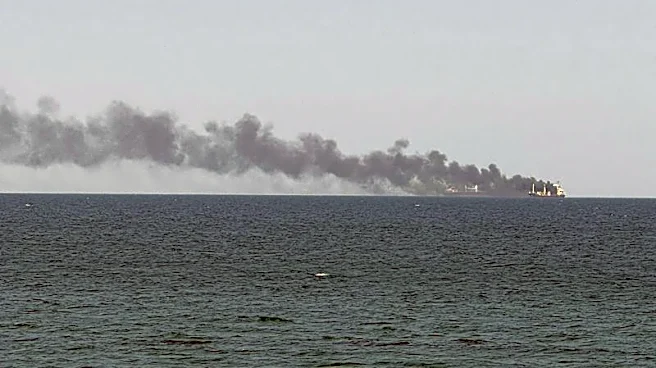
Ukraine's Unmanned Systems Forces (USF) have conducted a significant operation against Russia's shadow fleet, striking 13 additional vessels in the Black and Azov Seas. This operation, known as Operation 'Molochka,' has been ongoing since July 6, 2026,
and aims to disrupt Russian maritime logistics that circumvent international sanctions. The recent strikes targeted a variety of vessels, including dry cargo ships, an oil tanker, a gas carrier, a tugboat, and floating cranes. The operation has so far resulted in 172 vessels being hit, with the goal of paralyzing the logistics used for transporting oil and fuel without causing environmental damage. The USF's strategy involves disabling the vessels' self-propelled capabilities, effectively turning them into non-operational barges.
Why It's Important?
This operation is crucial as it targets the logistics network that supports Russia's oil exports, which are vital for financing its military operations. By disrupting these logistics, Ukraine aims to weaken Russia's economic and military capabilities. The strikes are part of a broader strategy to enforce international sanctions and limit Russia's ability to generate revenue from oil exports. The operation also highlights the ongoing conflict between Ukraine and Russia, with both sides accusing each other of targeting commercial shipping. Ukraine's actions are seen as a legitimate military strategy to counter Russian aggression, while Russia condemns them as acts of terrorism.
What's Next?
The continuation of Operation 'Molochka' is likely to escalate tensions between Ukraine and Russia, with potential international ramifications. Ukraine has communicated with the International Maritime Organization to justify its actions, while Russia may seek to bolster its maritime defenses or retaliate. The international community, particularly countries involved in sanctioning Russia, will be closely monitoring the situation. Further strikes could lead to increased diplomatic efforts to resolve the conflict or additional sanctions against Russia.
Beyond the Headlines
The operation raises ethical and legal questions about the use of unmanned systems in warfare and the targeting of logistics networks. It also underscores the complexities of enforcing international sanctions and the challenges of balancing military objectives with environmental concerns. The use of drones in maritime operations represents a shift in modern warfare tactics, highlighting the evolving nature of conflict in the region.