
What's Happening?
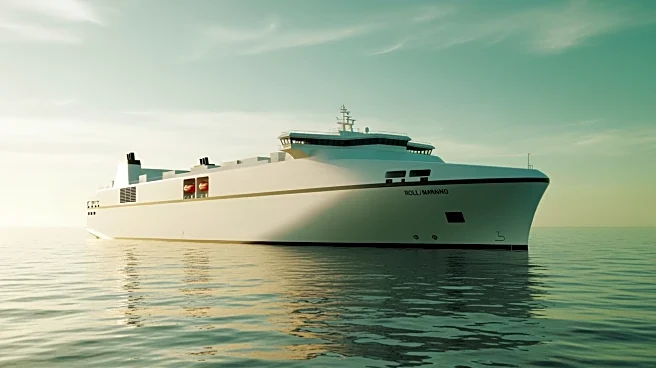
The TwinShip consortium, based in the European Union, has introduced a new pilot demonstration of an unmanned Roll-on/Roll-off (RoRo) vessel. This vessel is powered by green fuels and renewable energy,
with the goal of achieving net zero emissions by 2045. The demonstration utilizes digital twin technology and decision support systems to optimize voyages, particularly through active weather routing to enhance energy harvesting from wind and wave conditions. This approach aims to reduce reliance on green fuels by maximizing the use of renewable energy, thereby lowering operational costs and environmental impact. The unmanned design minimizes the need for human-system interaction, allowing the vessel to operate in conditions that might be challenging for human crews, thus promoting safer and more efficient shipping operations.
Why It's Important?
This development is significant as it represents a major step towards sustainable maritime operations, which are crucial for reducing the shipping industry's carbon footprint. The use of renewable energy in maritime transport can significantly cut down on fuel costs, which are a major expense for shipping companies. As green fuel prices are expected to rise, the ability to harness renewable energy offers a strategic advantage. The unmanned nature of the vessel also opens up new possibilities for shipping in challenging conditions, potentially leading to safer and more cost-effective operations. This innovation could set a precedent for future maritime technologies and policies aimed at achieving environmental sustainability.
What's Next?
The TwinShip project is expected to continue developing its integrated digital solutions to further enhance the sustainability and efficiency of ship operations. As the project progresses, it may influence regulatory frameworks and encourage other maritime companies to adopt similar technologies. The success of this pilot could lead to broader implementation of unmanned and renewable energy-powered vessels across the industry, potentially transforming global shipping practices. Stakeholders in the maritime industry, including shipbuilders, operators, and regulators, will likely monitor the outcomes of this project closely to assess its viability and scalability.