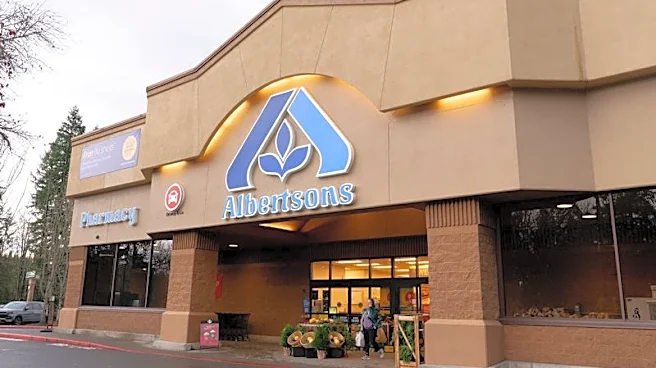








What's Happening?
Following a nine-week trial in King County Superior Court, Albertsons Companies has been found liable in Washington's opioid lawsuit, resulting in a $900 million verdict. This ruling marks the largest in the state's history. Attorney General Nick Brown
stated that Albertsons, along with its Safeway and Haggen pharmacies, dispensed over 641 million opioid pills in Washington between 2006 and 2022. A significant portion of these dispensations reportedly had unresolved 'red flags.' Brown contended that corporate policies prevented pharmacists from fulfilling their legal obligation to check for diversion. Albertsons has expressed disagreement with the ruling and is currently evaluating its options, including the possibility of an appeal.
Why It's Important?
This substantial verdict against Albertsons Companies underscores the ongoing legal and financial repercussions for pharmaceutical retailers implicated in the opioid crisis. The ruling highlights the increasing scrutiny on corporate practices within the pharmacy sector, particularly regarding the dispensing of controlled substances. For the U.S. healthcare system and public health, this case reinforces the legal expectation for pharmacies to actively monitor and prevent opioid diversion, potentially leading to stricter internal policies across the industry. The financial penalty could also set a precedent for future opioid-related litigation, influencing how other states and entities pursue accountability from companies involved in the opioid supply chain. This outcome could also impact Albertsons' financial performance and operational strategies as they consider an appeal and potential adjustments to their dispensing protocols.
What's Next?
Albertsons Companies is currently evaluating its options, which include filing an appeal against the $900 million verdict. Should an appeal proceed, the case would move to a higher court, potentially prolonging the legal battle. The outcome of any appeal could either uphold the current verdict, modify the penalty, or overturn the decision, significantly impacting Albertsons' financial liability and public image. Regardless of an appeal, this ruling is likely to prompt other pharmacy chains to review and potentially strengthen their internal policies and procedures for dispensing opioids to avoid similar legal challenges. State attorneys general and public health advocates will likely monitor the developments closely, using this case as a benchmark for future actions against companies deemed responsible for contributing to the opioid crisis.
Beyond the Headlines
The Albertsons verdict extends beyond a simple financial penalty, touching upon the ethical responsibilities of corporations in public health crises. It raises questions about the balance between profit motives and public safety, particularly in industries dealing with potentially addictive substances. The concept of 'red flags' in opioid dispensing, and the alleged corporate policies that hindered pharmacists from addressing them, points to a systemic issue within the pharmaceutical supply chain. This case could catalyze a broader re-evaluation of corporate governance and accountability standards across various sectors, emphasizing the need for robust internal controls that prioritize legal and ethical duties over commercial pressures. It also highlights the long-term societal cost of the opioid crisis, which continues to manifest in legal battles and demands for corporate restitution.