






What's Happening?
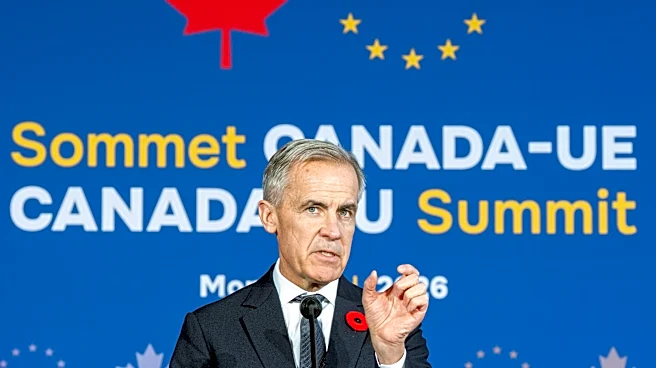
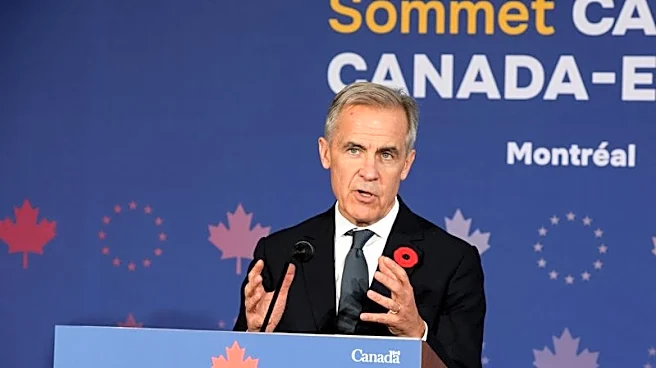
The Canada Border Services Agency (CBSA) and Frontex, the European Border and Coast Guard Agency, have signed a new agreement to enhance their existing cooperation. This agreement was formalized in Montreal during the European Union (EU)-Canada summit.
The primary goal of this renewed partnership is to intensify operational collaboration and information exchange on various cross-border issues. These issues include criminal threats, migration, human trafficking, and identity fraud. The arrangement also facilitates joint training initiatives and professional exchanges, allowing both agencies to share expertise and best practices. This builds upon their initial working arrangement signed in Warsaw in October 2010, which established Canada as one of Frontex's first non-European partners. Erin O’Gorman, President of CBSA, emphasized that this expanded partnership is a significant step towards strengthening Canada’s border security and sovereignty, enabling a combined effort against transnational crime.
Why It's Important?
This enhanced cooperation between CBSA and Frontex is significant for several reasons. For Canada, it means access to broader intelligence and operational strategies from a leading European border agency, potentially improving its ability to detect and counter complex transnational criminal activities. For Frontex, it strengthens its network of international partners, which already includes 17 non-EU countries like the United States and the United Kingdom, thereby extending its reach in combating global threats. The exchange of expertise and technology can lead to more sophisticated border management tools and techniques for both entities. This collaboration underscores a global recognition that border security challenges, such as human trafficking and organized crime, require coordinated international responses. The agreement also highlights the growing trend of international agencies pooling resources and knowledge to address shared security concerns more effectively, ultimately aiming to enhance safety and security across the Atlantic.
What's Next?
Following the signing of this new working arrangement, CBSA and Frontex are expected to implement the outlined initiatives, including increased information sharing and joint training programs. This will likely involve regular operational meetings, intelligence briefings, and collaborative exercises to address specific threats. The agreement also opens avenues for cooperation in research, technology, and innovation, suggesting future joint projects aimed at developing advanced border management tools. Both agencies will likely focus on integrating their systems and protocols to ensure seamless information flow and coordinated responses to emerging cross-border challenges. The success of this deepened partnership could serve as a model for other international collaborations in border security, potentially leading to further agreements with other nations or agencies seeking to enhance their capabilities in combating transnational crime and managing migration flows.
Beyond the Headlines
The deepening partnership between CBSA and Frontex reflects a broader global trend towards the 'externalization' of border control, where nations and blocs collaborate beyond their immediate geographical boundaries to manage security and migration. This approach aims to intercept threats further from national borders, but it also raises questions about jurisdiction, data privacy, and human rights in international operations. While the agreement emphasizes information exchange and joint training, the practical implications for individuals crossing borders, particularly asylum seekers and migrants, will be a critical area to monitor. The collaboration could lead to more harmonized, and potentially more stringent, border control measures globally. Furthermore, the focus on technology and innovation in border management suggests a future where AI and advanced surveillance play an even larger role, necessitating robust frameworks for ethical use and accountability to prevent potential abuses or biases in automated decision-making processes.