





What's Happening?
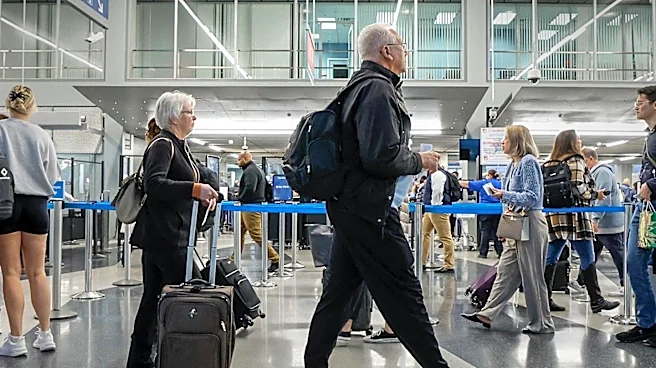
The Trump administration is advancing a new initiative, TSA Gold+, to expand the privatization of airport security across the United States. This program allows airports to contract private companies for security screenings, diverging from the traditional
model of federal TSA agents. The initiative builds on the existing Screening Partnership Program, which already permits some airports to use private contractors. The administration's budget for fiscal year 2027 includes a request for $477 million to privatize security at all Category III and IV airports, potentially affecting 220 out of approximately 440 commercial airports. The move is part of a broader push for privatization across various federal agencies.
Why It's Important?
The shift towards privatizing airport security could have significant implications for national security, employment, and operational efficiency. Proponents argue that privatization could lead to more agile and cost-effective security operations, potentially saving $52 million by reducing TSA agent positions. However, critics, including the TSA officers' union, warn that privatization may compromise security standards and reintroduce profit motives into critical national security functions. The program's success will depend on maintaining rigorous security protocols and ensuring that private contractors meet federal standards. The initiative reflects broader debates about the role of privatization in public services and its impact on security and efficiency.
What's Next?
As the TSA Gold+ program rolls out, airports will decide whether to opt into the privatization model. The program's implementation will be closely watched to assess its impact on security effectiveness and operational efficiency. Stakeholders, including federal employees, private contractors, and travelers, will be affected by these changes. The program's success or failure could influence future privatization efforts in other sectors. Additionally, the program's rollout may prompt legislative and regulatory scrutiny to ensure that security standards are upheld and that the transition to private contractors does not compromise public safety.
Beyond the Headlines
The privatization of airport security raises broader questions about the balance between public and private sector roles in national security. The initiative highlights the tension between cost-saving measures and the need to maintain robust security protocols. The program's success will depend on effective oversight and the ability of private contractors to adhere to federal standards. The move also reflects a larger trend towards privatization in government services, prompting discussions about the implications for accountability, transparency, and public trust in security operations.