





What's Happening?
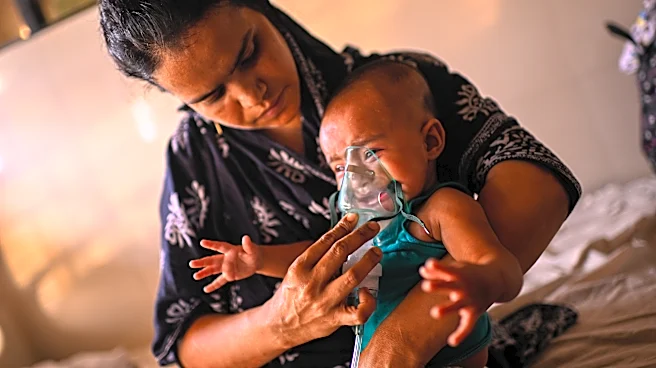
Bangladesh is currently facing its worst measles outbreak in years, with over 100 children reported dead due to the disease. In response, the government, in collaboration with the United Nations, has launched an emergency measles-rubella vaccination campaign.
This initiative targets children aged six months to five years in high-risk districts, with plans to expand nationwide. The outbreak, which began in March, has highlighted significant gaps in the country's immunization program, attributed to previous government mismanagement and vaccine stockpile shortages. UNICEF and WHO have pointed out critical immunity gaps, especially among zero-dose and under-vaccinated children, and the alarming rate of infections among infants under nine months, who are not yet eligible for routine vaccination.
Why It's Important?
The measles outbreak in Bangladesh underscores the critical importance of maintaining robust immunization programs to prevent the resurgence of preventable diseases. The situation highlights the consequences of political instability and mismanagement on public health infrastructure, as the current government attributes the gaps in vaccination coverage to the previous regime's failures. This outbreak not only poses a direct threat to the health of children in Bangladesh but also serves as a warning to other nations about the potential for similar outbreaks if vaccination efforts are not sustained. The global health community is closely monitoring the situation, as measles is highly contagious and can lead to severe complications, particularly in young children.
What's Next?
The emergency vaccination drive is expected to continue, with the government aiming to cover all high-risk areas before expanding the campaign nationwide. Authorities are urging parents to seek medical attention for children showing symptoms of measles, rather than relying on local pharmacies. The success of this initiative will depend on the government's ability to secure sufficient vaccine supplies and effectively manage the distribution and administration of vaccines. The international community, including organizations like UNICEF and WHO, may play a crucial role in supporting Bangladesh's efforts to control the outbreak and prevent future occurrences.