



What's Happening?
Recent research has revisited the role of PARP1 activation in synaptic potentiation and memory formation. The study found that inhibiting PARP1 impairs long-term memory in trained animals, although short-term memory remains unaffected. PARP1 activation,
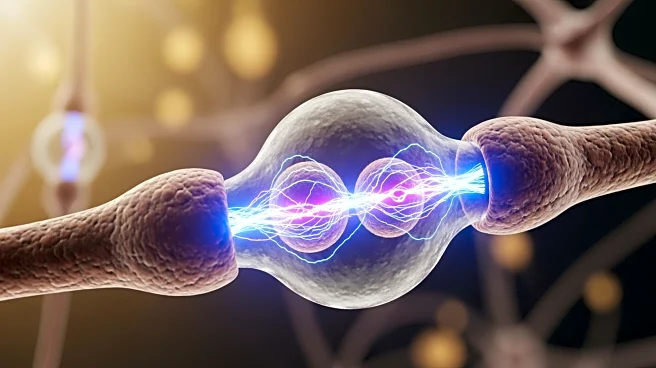
triggered by high-frequency electrical stimulation, is crucial for long-term synaptic potentiation (LTP) in cortical and hippocampal neurons. This activation involves the expression of immediate early genes (IEG) associated with synaptic plasticity. The study also identified an alternative mode of PARP1 activation independent of DNA damage, involving its interaction with phosphorylated Erk2. This interaction facilitates polyADP-ribosylation, a process essential for chromatin relaxation and gene expression necessary for memory formation.
Why It's Important?
The findings highlight the critical role of PARP1 in cognitive functions, particularly in long-term memory formation and synaptic plasticity. Understanding the molecular mechanisms of PARP1 activation could lead to new therapeutic strategies for memory-related disorders. The study suggests that PARP1's interaction with phosphorylated Erk2 and subsequent polyADP-ribosylation are vital for the structural changes in chromatin that enable gene expression. This research could pave the way for developing drugs targeting PARP1 pathways to enhance memory and learning capabilities, offering potential benefits for individuals with cognitive impairments.
Beyond the Headlines
The study's insights into PARP1's role in memory formation could have broader implications for understanding neurodegenerative diseases and cognitive decline. By elucidating the molecular pathways involved in synaptic plasticity, researchers can explore new avenues for treating conditions like Alzheimer's disease. The research also underscores the importance of epigenetic mechanisms in learning and memory, suggesting that interventions targeting these pathways could improve cognitive health. Additionally, the study's findings may influence future research on the genetic and environmental factors affecting memory and learning.