






What's Happening?
In Norway, two amateur metal detectorists have made a significant archaeological discovery by uncovering the largest known stash of Viking Age coins in the country. Initially, the pair found 19 silver coins in a field near the village of Rena on April
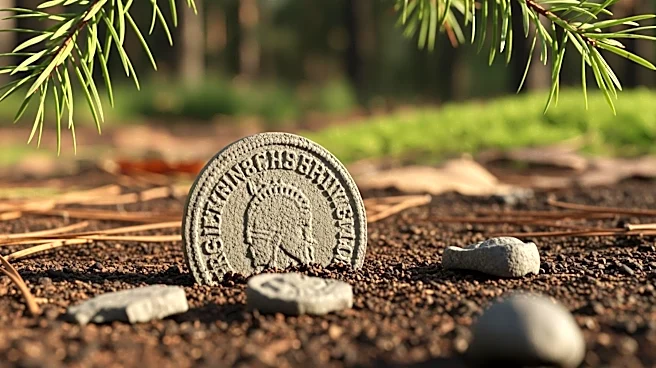
10. This discovery prompted a more extensive archaeological investigation, which has since resulted in the recovery of over 3,150 coins, with the search still ongoing. The coins, primarily silver, originate from England, Germany, Denmark, and Norway, and are believed to have been buried between the late 900s and early 1000s. This period corresponds to the reigns of notable historical figures such as Cnut the Great and Ethelred II of England, Otto III of Rome, and Norway's Harald Hardrada. The find has been described as a 'historic' event by Norway's climate and environment minister, and county archaeologist May-Tove Smiseth noted the rarity of such a discovery in one's career.
Why It's Important?
This discovery is significant as it provides valuable insights into the economic and cultural exchanges during the Viking Age. The presence of foreign coins from England and Germany in Norway highlights the extensive trade networks and the influence of foreign currency on Norway's economy during this period. Such findings can enhance our understanding of the Viking Age's economic history and the interactions between different regions in Europe. For historians and archaeologists, this discovery offers a rare opportunity to study a well-preserved collection of artifacts that can shed light on the socio-economic conditions of the time. Additionally, the find underscores the potential contributions of amateur archaeologists in uncovering historical treasures, which can lead to further professional archaeological investigations.
What's Next?
The ongoing search for more coins and artifacts in the area suggests that further discoveries may be imminent. Archaeologists will likely continue to excavate the site to uncover additional items that could provide more context about the Viking Age in Norway. The coins will undergo detailed analysis and preservation efforts, potentially leading to exhibitions in museums, such as the University of Oslo's Museum of Cultural History, where they can be studied and appreciated by the public. This discovery may also encourage more collaborative efforts between amateur detectorists and professional archaeologists, fostering a greater appreciation for historical preservation and research.