



What's Happening?
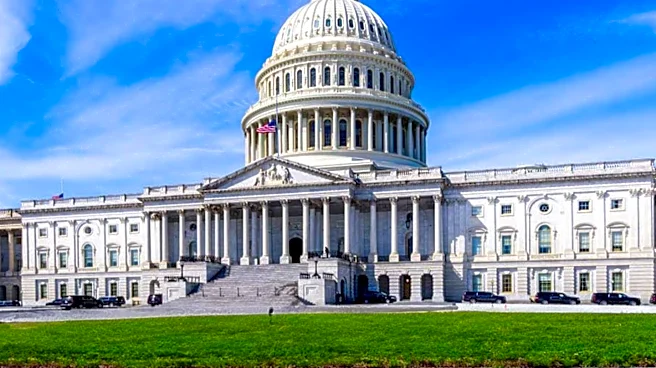
A bipartisan group of 19 U.S. lawmakers has called on the Trump administration to enhance its strategy for the upcoming 2027 World Radiocommunication Conference (WRC-27) in Shanghai. The lawmakers, led by Representatives April McClain Delaney and Jay
Obernolte, expressed concerns that China might leverage the conference to alter international spectrum rules, particularly those affecting Wi-Fi, 6G, and satellite systems. The letter, addressed to the State Department, the Commerce Department, and the Federal Communications Commission (FCC), emphasized the importance of a unified U.S. stance and collaboration with allied nations to prevent China from gaining an upper hand. The lawmakers highlighted the critical role of the 6 GHz spectrum band for U.S. technological competitiveness, noting that a significant portion of smartphone data in the U.S. relies on Wi-Fi. They warned against China's push for exclusive licensed approaches in this band, which could undermine U.S. influence and innovation.
Why It's Important?
The WRC-27 is a pivotal event organized by the International Telecommunication Union (ITU) that sets binding international spectrum allocations, impacting the deployment of wireless technologies globally. Decisions made at this conference will shape the future of 6G networks, advanced satellite systems, and Wi-Fi technologies, influencing global connectivity well into the 2030s. The U.S. and China are engaged in a broader technological rivalry, with spectrum policy emerging as a critical battleground. The lawmakers' initiative underscores the need for the U.S. to lead in global spectrum policy to protect its technological leadership and economic competitiveness. The outcome of WRC-27 could significantly affect U.S. industries, consumers, and the broader economy, making it crucial for the U.S. to coordinate effectively with its allies and ensure its interests are safeguarded.
What's Next?
The lawmakers have requested a detailed response from the administration by August 22, outlining how preparations for WRC-27 are being coordinated, including staffing, resources, and the selection of a U.S. ambassador for the conference. They also seek a strategy for building coalitions with like-minded countries, particularly targeting nations like Mexico and Brazil, which have shown some alignment with China on spectrum issues. The NCTA, representing the Internet and Television industry, has expressed support for the lawmakers' efforts, highlighting the importance of maintaining access to the full 6 GHz band for next-generation technologies. As the conference is still two years away, this early intervention by Congress signals a commitment to holding the executive branch accountable for its readiness and ensuring U.S. leadership in global spectrum policy.