




What's Happening?
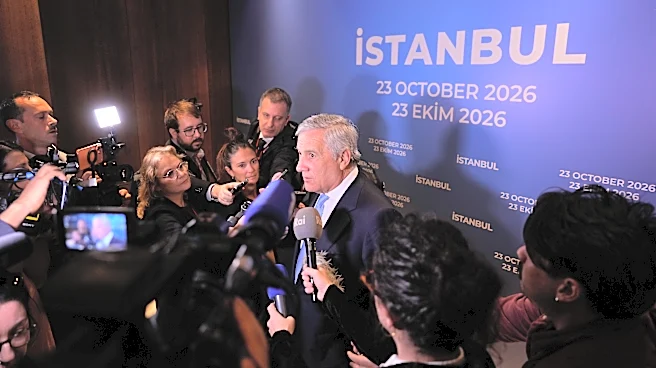
Italy's Foreign Minister Antonio Tajani announced that his personal data has been stolen and published on the Darknet by hackers. Tajani stated on social media platform X that he was targeted due to the Italian government's stance on Ukraine, indicating
that criminals were seeking additional personal details about him and his family. He described the ongoing cybercriminal activity as exposing him and his loved ones to new threats and intimidation. Italian Prime Minister Giorgia Meloni explicitly attributed the cyberattack to 'pro-Russian hackers,' calling it a 'matter of grave concern' requiring utmost determination. This incident occurs amidst a surge of suspected 'hybrid attacks' across Europe, including drone incursions, sabotage in NATO territories, attacks on food supplies, threats against media outlets, and bomb threats causing airline flight disruptions, all believed to be orchestrated by the Kremlin.
Why It's Important?
This cyberattack on a high-ranking Italian official underscores the escalating nature of cyber warfare and hybrid threats in the current geopolitical climate. The targeting of a foreign minister directly linked to his country's foreign policy stance on Ukraine highlights how digital attacks are being used as tools of intimidation and disruption against nations supporting Ukraine. For NATO and EU member states, this incident reinforces the need for robust cybersecurity defenses and intelligence sharing to counter state-sponsored or state-aligned cyber threats. The broader context of 'hybrid attacks' across Europe suggests a coordinated effort to destabilize and pressure Western nations, impacting critical infrastructure, public safety, and political stability. The public exposure of personal data also raises concerns about the security of public officials and the potential for further exploitation or harassment.
What's Next?
Italian authorities will likely launch a comprehensive investigation into the cyberattack to identify the perpetrators and assess the extent of the data breach. Measures to enhance the cybersecurity of government officials and critical infrastructure are expected to be reviewed and strengthened. Italy, in coordination with its EU and NATO allies, will likely continue to monitor and respond to similar cyber threats, potentially sharing intelligence and developing joint defense strategies. The incident may also prompt further diplomatic responses or condemnations against actors perceived to be behind such attacks. Public awareness campaigns regarding cybersecurity and digital hygiene for public figures might also be considered to mitigate future risks.
Beyond the Headlines
The cyberattack on Minister Tajani transcends a simple data breach; it represents a direct assault on democratic governance and national sovereignty through digital means. The use of personal data for intimidation aims to create a chilling effect on policymakers and potentially influence foreign policy decisions. This incident highlights the blurred lines between conventional warfare and cyber warfare, where digital tools are employed to achieve geopolitical objectives without direct military engagement. It also raises ethical questions about the weaponization of personal information and the responsibility of states to protect their officials from such sophisticated threats. The ongoing 'hybrid attacks' across Europe suggest a long-term shift in international conflict, where digital resilience becomes as crucial as traditional military strength.