



What's Happening?
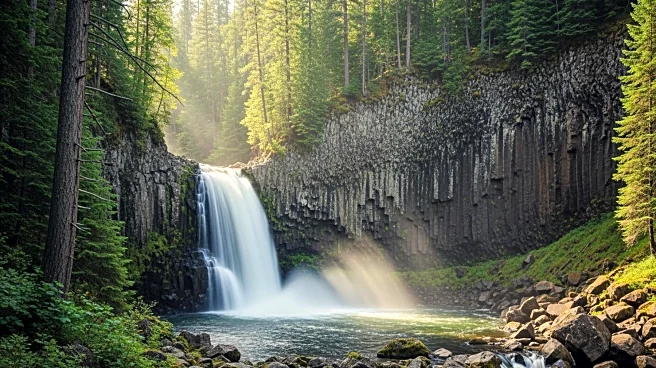
The state of Oregon is moving towards acquiring Abiqua Falls, a renowned natural site, after it was listed for sale on Redfin. The waterfall, known for its 92-foot vertical drop, has been privately owned for over a century but accessible to the public.
The current owner, a nonprofit supporting a community of Benedictine monks, decided to sell the property earlier this year. In response, a bipartisan group of Oregon lawmakers approved $2.1 million to purchase the falls and its surrounding land. The Oregon Parks and Recreation Department is tasked with completing due diligence, including environmental and archaeological reviews, before finalizing the purchase. The future management of the site remains undecided, with possibilities including local or tribal government oversight.
Why It's Important?
The acquisition of Abiqua Falls by the state of Oregon represents a significant move towards preserving natural landmarks for public use. This decision could prevent potential commercial development that might restrict public access or alter the site's natural beauty. The purchase aligns with broader conservation efforts and reflects public sentiment favoring the protection of natural resources. However, the acquisition also raises concerns about the financial implications for the state, particularly given the current budget constraints. The management of the site could strain the already stretched resources of the state park system, necessitating careful planning to balance conservation with fiscal responsibility.
What's Next?
The Oregon Parks and Recreation Department will conduct thorough environmental and archaeological assessments to ensure the site's preservation. The outcome of these reviews will influence the final decision on the purchase. Additionally, discussions will continue regarding the management of Abiqua Falls, with options including state, local, or tribal governance. The decision will likely involve input from various stakeholders, including environmental groups, local communities, and government agencies. The process will require balancing public access, conservation goals, and budgetary constraints.