




What's Happening?
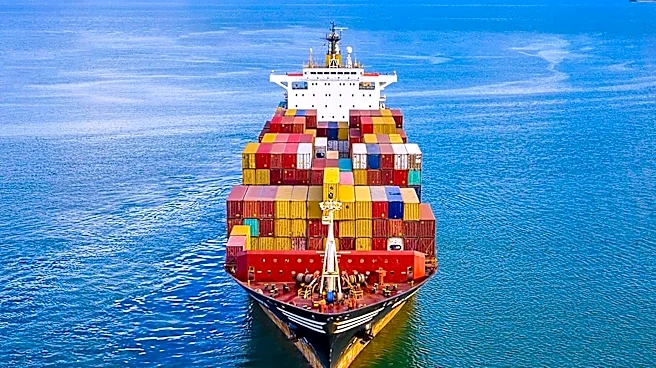
Laura Linderman, Senior Fellow for Eurasia and Director of Programs at the Central Asia-Caucasus Institute, has highlighted the increasing strategic importance of the Middle Corridor. According to Linderman, trans-Caspian cargo has seen a significant
increase, roughly quintupling since 2018. This growth is further evidenced by Uzbek manufacturers planning final-stage production in Georgia’s Poti free zone. Linderman notes that while Georgia has maintained ties with Central Asia since the 1990s, these connections were previously limited and primarily focused on the Baku–Tbilisi energy axis. She emphasizes that current developments represent a shift towards 'coordinated institutionalisation' rather than isolated bilateral gestures. These changes are attributed to Russia’s declining influence, which has created opportunities for smaller Eurasian states to pursue new strategic directions.
Why It's Important?
The expansion of the Middle Corridor and the increased economic activity, such as Uzbek manufacturing in Georgia, signify a notable shift in regional trade dynamics. This development could enhance economic stability and growth for the involved Eurasian nations by diversifying trade routes and reducing reliance on traditional corridors. For the U.S., this could mean new opportunities for economic engagement and partnerships in a strategically vital region, potentially fostering greater stability and counterbalancing other geopolitical influences. The strengthening of economic ties between Central Asian countries and Georgia, particularly through infrastructure projects like the Middle Corridor, could also contribute to regional security by promoting interdependence and shared economic interests. This shift away from Russia's historical dominance in the region could also open doors for increased Western influence and investment, aligning with broader U.S. foreign policy objectives of promoting open markets and democratic governance.
What's Next?
The continued growth of the Middle Corridor is expected to lead to further infrastructure development and increased trade volumes across the Caspian Sea and into Georgia. Linderman suggests that Georgia's strategy of building ties with Tashkent and Astana is a 'smart part' of its hedging approach, emphasizing that this eastern outreach should complement, rather than substitute, its Western affiliations. This indicates a potential for Georgia to further integrate into broader international economic frameworks while strengthening regional partnerships. Future developments may include additional investments in logistics and manufacturing capabilities within the Poti free zone and other strategic locations along the corridor. The evolving geopolitical landscape, particularly Russia's diminishing influence, will likely continue to create opportunities for these states to forge new alliances and economic pathways, potentially attracting more international attention and investment.
Beyond the Headlines
The developments in the Middle Corridor reflect a deeper geopolitical realignment in Eurasia, driven by the shifting power dynamics and Russia's reduced regional influence. This strategic pivot by smaller Eurasian states, particularly Georgia, towards strengthening ties with Central Asia, represents a pragmatic approach to securing economic and political autonomy. The emphasis on 'coordinated institutionalisation' suggests a deliberate effort to build resilient regional networks that can withstand external pressures. This trend could lead to a more multipolar regional order, where countries like Georgia leverage their geographical assets to become crucial transit hubs. The long-term implications include a potential redefinition of trade routes between Asia and Europe, offering alternatives to traditional land and sea passages and fostering greater economic resilience for participating nations. This also highlights the complex interplay between geography, economics, and geopolitics in shaping the future of the Eurasian continent.