








What's Happening?
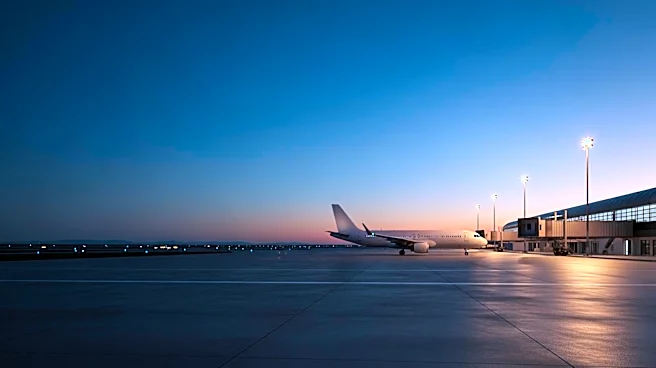
Recent reports have surfaced alleging that Pakistan allowed Iranian military aircraft to park at its Nur Khan Airbase during the U.S.-Iran crisis, potentially shielding them from American and Israeli airstrikes. This development has raised questions about
Pakistan's neutrality in its role as a mediator between Washington and Tehran. According to sources, Tehran moved several key defense assets to the Pakistani airbase, including an Iranian Air Force RC-130 aircraft. The U.S. believes this move was part of Iran's strategy to protect its military assets from potential strikes. The report has sparked significant backlash in Washington, with U.S. lawmakers, including Senator Lindsey Graham, questioning Pakistan's diplomatic role and calling for a reassessment of its position as a mediator.
Why It's Important?
The allegations against Pakistan could have significant implications for its diplomatic relations with the United States and its role in regional geopolitics. If Pakistan is perceived as favoring Iran, it could strain its ties with the U.S., which relies on Islamabad as a strategic partner in the region. The situation also highlights the complex balancing act Pakistan faces in maintaining relationships with both Washington and Tehran, while also considering its strategic ties with China. The controversy underscores the challenges of diplomatic mediation in a region marked by longstanding tensions and alliances.
What's Next?
The U.S. may seek further clarification from Pakistan regarding the allegations, which could lead to diplomatic discussions or reassessments of bilateral relations. Pakistan's response to these allegations will be crucial in determining its future role as a mediator in the region. Additionally, the situation may prompt other regional players, such as Israel, to voice concerns or take diplomatic actions based on Pakistan's perceived neutrality. The outcome of these developments could influence future U.S. foreign policy decisions in the Middle East.
Beyond the Headlines
The incident raises broader questions about the ethics and challenges of diplomatic mediation in conflict zones. Pakistan's alleged actions could be seen as undermining its credibility as a neutral mediator, potentially affecting its ability to broker peace in future conflicts. The situation also highlights the geopolitical complexities of the Middle East, where alliances and enmities are often fluid and influenced by broader strategic interests. The role of external powers, such as China, in shaping regional dynamics adds another layer of complexity to the situation.