
What's Happening?
Jens Laerke, spokesperson for the UN humanitarian office, has warned that an Israeli operation in Rafah could result in a 'slaughter' of civilians and severely impact humanitarian operations across the entire
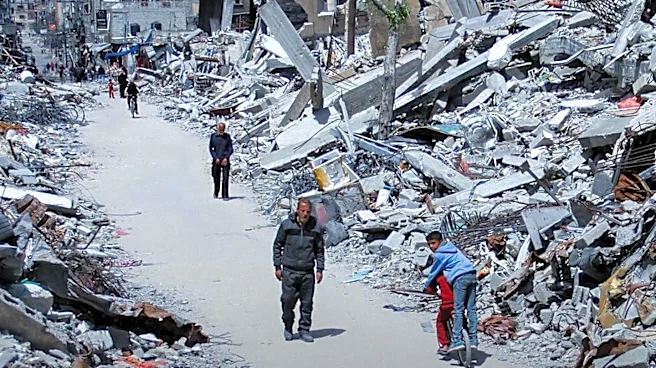
Gaza Strip. Israel has indicated its intention to conduct an operation against Hamas in Rafah, where approximately one million displaced people are currently sheltering in overcrowded conditions, having fled months of Israeli bombardments. Laerke emphasized that aid operations, including medical clinics and food distribution points, are primarily run out of Rafah. A World Health Organization official, Rik Peeperkorn, added that while a contingency plan for an incursion has been prepared, including a new field hospital, it would be a 'band-aid' and insufficient to prevent a substantial rise in the death toll. Peeperkorn also expressed concern that an incursion could close the Rafah crossing, a critical entry point for medical supplies.
Why It's Important?
This warning from UN officials is critically important because it highlights the extreme risk to civilian lives and the potential collapse of humanitarian aid efforts in Gaza. Rafah is currently the primary hub for aid distribution and a refuge for a vast number of displaced individuals. An Israeli military operation in this densely populated area would not only endanger hundreds of thousands of civilians but also cripple the infrastructure necessary for delivering essential supplies like food, water, and medicine to the entire Strip. The closure of the Rafah crossing, as feared by the WHO, would cut off a vital lifeline for medical supplies, exacerbating an already dire health crisis. This situation underscores the urgent need for international intervention to protect civilians and ensure the continuity of humanitarian assistance.
What's Next?
The UN humanitarian office and other international organizations will likely continue to advocate strongly against a full-scale military operation in Rafah, emphasizing the catastrophic humanitarian consequences. Diplomatic efforts are expected to intensify to de-escalate the situation and find alternative solutions that prioritize civilian protection and humanitarian access. Aid agencies will continue to prepare contingency plans, though acknowledging their limitations, and will likely seek to pre-position supplies where possible. The international community will be closely watching developments, with potential calls for a ceasefire or humanitarian corridors to allow for safe passage of civilians and aid. The focus will remain on preventing a further escalation of the humanitarian crisis and ensuring the delivery of life-saving assistance.
Beyond the Headlines
The potential for a 'slaughter' in Rafah, as warned by the UN, points to a deeper ethical and legal dilemma surrounding modern warfare and the protection of civilians in densely populated areas. It raises questions about the principles of proportionality and distinction under international humanitarian law. The displacement of a million people into a confined space, followed by the threat of further military action, highlights the profound challenges of protecting non-combatants in conflict zones. This situation also underscores the limitations of humanitarian aid when faced with overwhelming military operations, suggesting that aid alone cannot solve a crisis rooted in conflict. The long-term implications include potential mass casualties, further displacement, and a protracted humanitarian catastrophe that could destabilize the region and challenge the efficacy of international humanitarian norms.