






What's Happening?
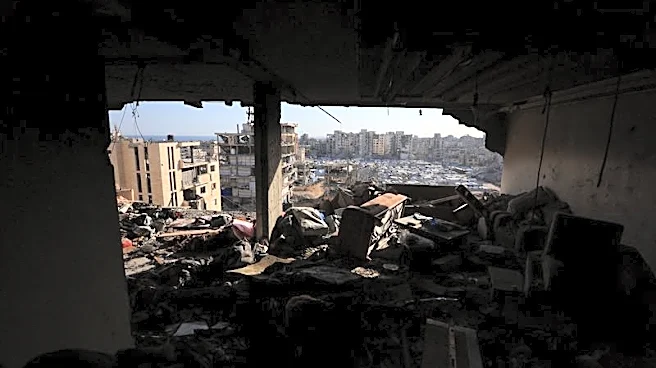
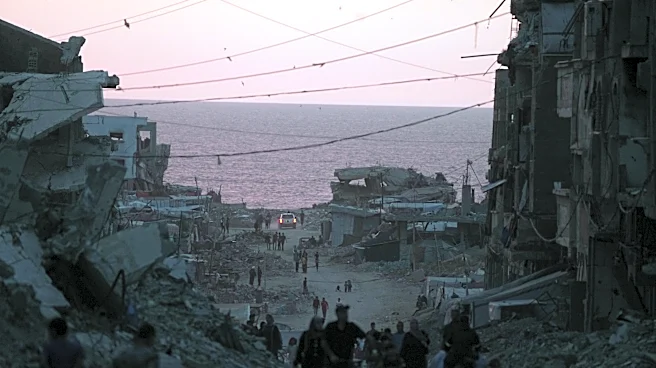
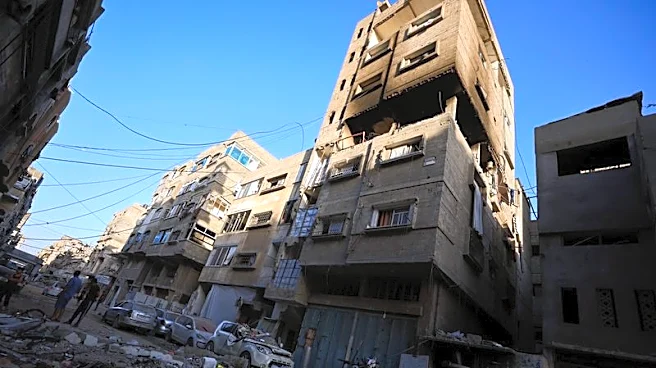
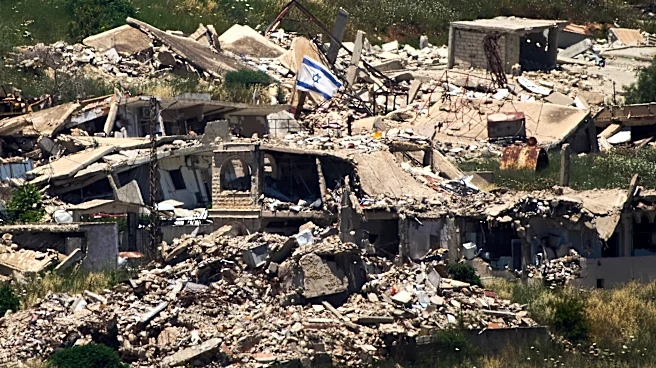
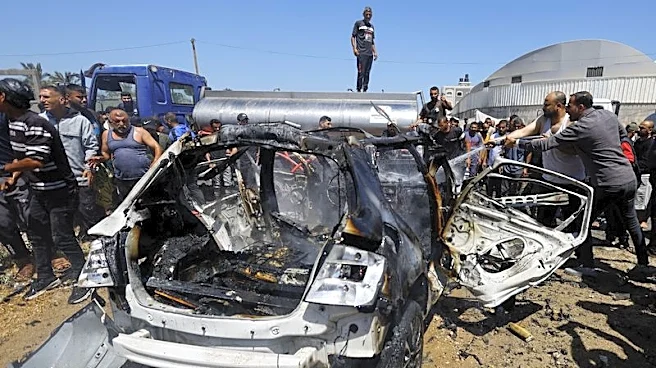
Security officials have raised concerns that Hamas is exploiting a governance vacuum in Gaza to regain control, potentially derailing reconstruction efforts in Rafah. The Israeli government is expected to oppose initiatives by the Palestinian technocratic
government, fearing Hamas will re-establish control over key areas. The 'Rafah First' initiative aims to transform Rafah into a demilitarized zone, but progress is hindered by Hamas's reluctance and the U.S.'s difficulty in applying pressure. The situation is complicated by the Israeli Defense Forces' focus on the northern front in Lebanon, leaving Gaza vulnerable to Hamas's influence.
Why It's Important?
The resurgence of Hamas in Gaza poses significant challenges to peace and reconstruction efforts. If Hamas regains control, it could lead to increased instability and violence, affecting regional security and international relations. The situation also complicates U.S. diplomatic efforts in the region, as it struggles to leverage influence over Hamas. The potential failure of the 'Rafah First' initiative could delay humanitarian aid and infrastructure development, exacerbating the humanitarian crisis in Gaza.
What's Next?
The Israeli government may intensify its opposition to the Palestinian technocratic government's initiatives, potentially leading to increased tensions. International stakeholders, including the U.S., may need to reassess their strategies to apply effective pressure on Hamas. The success of the 'Rafah First' initiative hinges on demilitarizing the area, which remains a contentious issue. The situation requires careful monitoring as it evolves, with potential implications for broader Middle Eastern geopolitics.