








What's Happening?
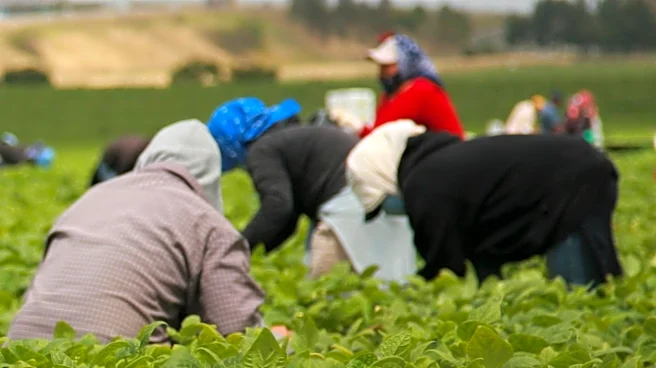
The Food and Agriculture Organization (FAO) of the United Nations has expanded its conditional cash assistance program in the Gaza Strip, aiming to support 1,500 small-scale farmers. This initiative is projected to help produce enough fresh vegetables
to meet the annual dietary needs of approximately 100,000 people. The program, funded by international partners including Belgium and the European Union, requires farmers to use the cash to cultivate their land. This expansion builds on a successful 2025 pilot project that supported 200 households. Despite these efforts, the agrifood sector in Gaza faces challenges such as limited cropland and restricted access to agricultural inputs.
Why It's Important?
The FAO's initiative is crucial for addressing food insecurity in the Gaza Strip, a region with limited agricultural resources and ongoing economic challenges. By supporting local farmers, the program aims to enhance food production and self-sufficiency, reducing reliance on external aid. The success of this initiative could serve as a model for similar programs in other regions facing food security issues. Additionally, the program highlights the importance of international cooperation in addressing humanitarian needs and supporting sustainable agricultural practices.
What's Next?
The FAO will continue to monitor the program's impact on food production and local economies. There may be calls for further international support to address the ongoing challenges in Gaza's agrifood sector. The success of this initiative could lead to expanded efforts to liberalize the import of agricultural inputs, which is essential for the long-term sustainability of local farming. Stakeholders, including international donors and local authorities, will need to collaborate to ensure the program's continued success and address any emerging challenges.