




What's Happening?
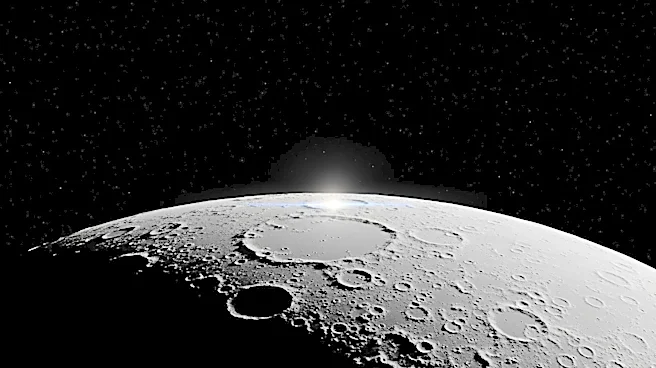
NASA's Artemis II mission recently involved astronauts observing flashes of light on the Moon caused by meteoroid impacts. Concurrently, volunteers participating in the NASA-funded Impact Flash project used their telescopes to record these lunar flashes from
Earth. The project, led by Ben Fernando from Los Alamos National Laboratory, aims to analyze the locations and brightness of these flashes to understand the nature and origin of the impactors and the craters they form. Although the Artemis II mission has concluded, the Impact Flash team continues to seek volunteer contributions to monitor the Moon for flashes. These observations are crucial for determining the current impact rate on the Moon and its variations over time. Volunteers with telescopes of at least four inches in diameter and video capabilities are encouraged to participate by submitting their observations through the Impact Flash website.
Why It's Important?
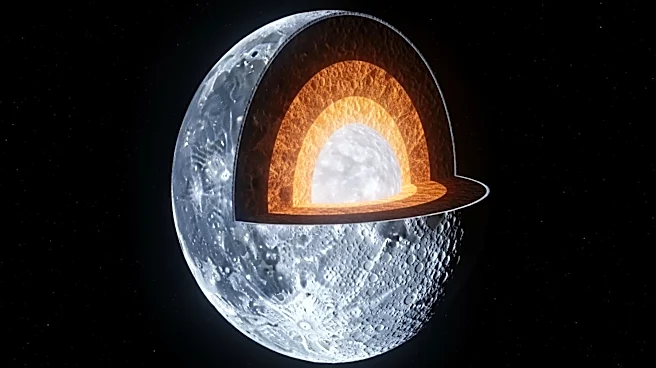
The Impact Flash project is significant as it leverages citizen science to enhance our understanding of lunar impacts and their effects. By involving volunteers, NASA can gather a larger dataset, which is essential for accurately assessing the frequency and impact of meteoroid collisions on the Moon. This data is not only valuable for understanding lunar geology but also for planning future lunar missions, as it provides insights into potential hazards for spacecraft and astronauts. Additionally, the project aims to study 'moonquakes,' which are similar to earthquakes, to gain a deeper understanding of the Moon's interior structure. This research could have broader implications for planetary science and our understanding of celestial bodies.
What's Next?
The Impact Flash team plans to continue collecting data from volunteers to refine their understanding of lunar impacts. They also intend to deploy seismometers on the Moon to measure ground tremors, which will help identify the sources of moonquakes. This information will contribute to a more comprehensive understanding of the Moon's internal composition. The project will continue to collaborate with amateur astronomers and other scientific groups to expand its observational capabilities. As more data is collected, the team hopes to develop a detailed model of the Moon's impact environment, which could inform future lunar exploration and research initiatives.