




What's Happening?
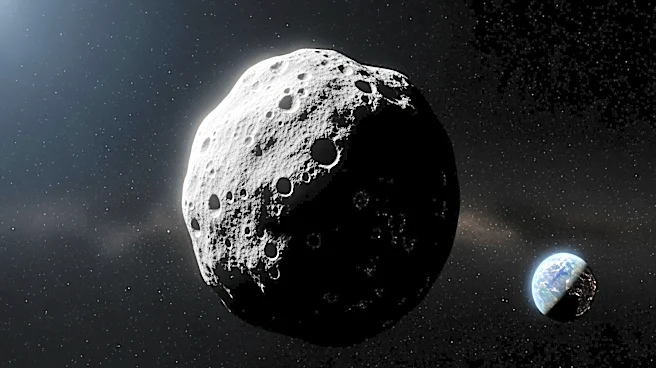
A newly discovered asteroid, 2026 JH2, is set to pass unusually close to Earth on May 18, traveling at approximately 20,000 mph. Discovered by astronomers at the Mount Lemmon Observatory in Arizona, the asteroid is comparable in size to a blue whale and
will pass closer to Earth than some satellites. The asteroid's orbit takes it as far as Jupiter, and it completes a circuit around the sun every 3.7 years. Despite its proximity, there is no risk of collision with Earth. The event will be visible to the public through telescopes and online streams, providing a unique opportunity for observation.
Why It's Important?
The close approach of asteroid 2026 JH2 serves as a reminder of the potential risks posed by near-Earth objects. It highlights the importance of ongoing efforts to detect and track asteroids that could pose a threat to our planet. This event also underscores the need for continued research and development of strategies to mitigate potential impacts. The ability to observe such a close flyby provides valuable data for scientists and raises public awareness about the importance of planetary defense initiatives.
What's Next?
Following the flyby of 2026 JH2, scientists will continue to monitor its trajectory and gather data to refine their understanding of its orbit. Future observations will help improve predictive models for similar near-Earth objects. The event also sets the stage for upcoming close encounters with other asteroids, such as the 'God of Chaos' asteroid Apophis in 2029. These events will continue to drive research and international collaboration in the field of asteroid detection and planetary defense.