
What's Happening?
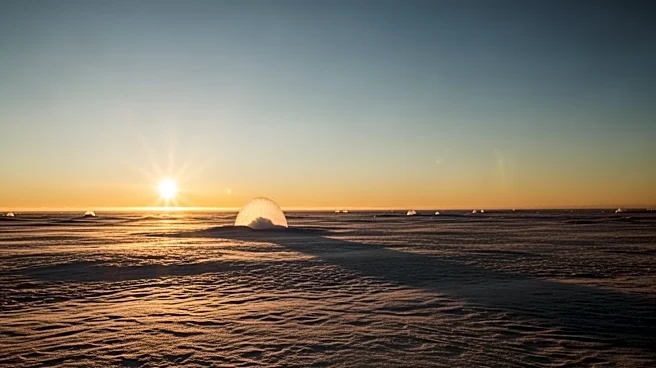
Residents of Utqiagvik, the northernmost city in the United States, are experiencing an extended period of continuous daylight as the Arctic summer begins. This phenomenon, known as the midnight sun, occurs
in regions north of the Arctic Circle where the planet's axial tilt keeps the sun visible for extended periods during summer. According to the National Weather Service Fairbanks, the sun rose above the horizon at 2:57 AM on May 10 and will not set again for 84 straight days, until August 2. A mesmerizing time-lapse video captures the sun skimming the horizon before rising fully, marking the beginning of a season where darkness won't return until early August. This annual occurrence is part of Utqiagvik's extreme seasonal changes, with months of continuous daylight during summer offset by prolonged darkness in winter.
Why It's Important?
The phenomenon of the midnight sun in Utqiagvik highlights the unique environmental and cultural aspects of life in the Arctic region. This extended daylight period can significantly impact the daily lives of residents, affecting sleep patterns, mental health, and local activities. The continuous daylight also attracts tourists and researchers interested in experiencing and studying this natural occurrence. Additionally, the midnight sun underscores the broader implications of climate change, as the Arctic becomes more accessible and its strategic importance increases. The shifting magnetic North Pole and changing climate conditions are prompting shifts in alliances and military strategies, as seen in Canada's deepening Arctic defense ties with Nordic countries.
What's Next?
As the Arctic region continues to gain strategic importance, there may be increased interest from governments and organizations in monitoring and studying the effects of climate change and its impact on the environment and local communities. The extended daylight period in Utqiagvik could lead to more tourism and research activities, providing economic opportunities for the region. Additionally, the phenomenon may prompt discussions on how to adapt to the changing climate and its effects on Arctic communities, including infrastructure development and resource management.
Beyond the Headlines
The midnight sun phenomenon in Utqiagvik offers a unique opportunity to explore the cultural and psychological adaptations of communities living in extreme environments. The continuous daylight challenges traditional notions of time and daily routines, prompting residents to develop unique coping mechanisms. This event also raises awareness about the broader implications of climate change, as the Arctic's accessibility and strategic importance continue to evolve. The shifting magnetic North Pole and changing climate conditions may lead to long-term shifts in global alliances and military strategies, highlighting the need for international cooperation in addressing Arctic issues.