





What's Happening?
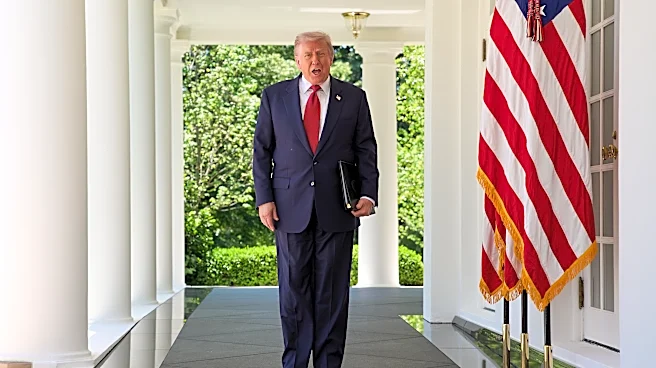
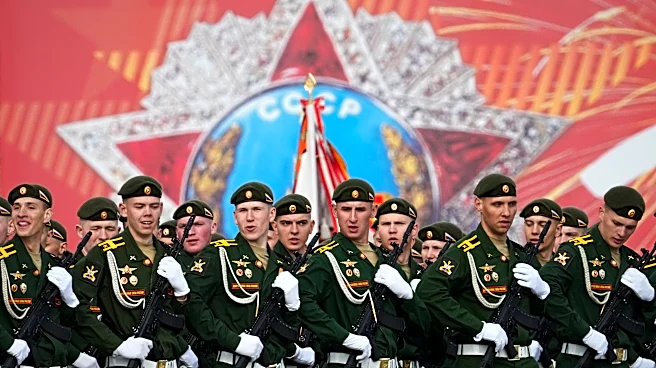
Ukraine and Russia have agreed to a three-day ceasefire during Russia's annual Victory Day celebrations, commemorating the Soviet victory over Nazi Germany in World War II. This pause in hostilities, announced by President Donald Trump, includes a swap
of 1,000 prisoners from each side. Both Ukrainian President Volodymyr Zelensky and Russian President Vladimir Putin accepted the truce, which is part of ongoing U.S. efforts to mediate an end to the conflict. Zelensky emphasized that the truce is an opportunity to exchange prisoners rather than a gesture towards Russia's holiday. The agreement follows a period of heightened tensions, with both countries threatening attacks during the holiday commemorations.
Why It's Important?
The ceasefire represents a significant diplomatic effort by the U.S. to de-escalate the ongoing conflict between Ukraine and Russia. It highlights President Trump's role in international diplomacy and the potential for U.S. influence in resolving global conflicts. The truce provides a temporary reprieve from violence, allowing for humanitarian actions such as prisoner exchanges. However, the underlying tensions and unresolved issues, particularly regarding territorial disputes, remain. The ceasefire's success or failure could impact future diplomatic negotiations and the broader geopolitical landscape in Eastern Europe.
What's Next?
The immediate next steps involve monitoring the adherence to the ceasefire and the successful exchange of prisoners. The U.S. and other international stakeholders will likely continue diplomatic efforts to extend the ceasefire and work towards a more permanent resolution. The situation remains volatile, with potential for renewed hostilities if the ceasefire is breached. The international community will be watching closely to see if this temporary pause can lead to more substantial peace talks.
Beyond the Headlines
The ceasefire occurs against a backdrop of domestic challenges in Russia, including economic issues and public discontent over the prolonged conflict. The Victory Day celebrations, traditionally a display of military might, are scaled back this year, reflecting the impact of the ongoing war. The situation underscores the complex interplay of historical narratives, national identity, and current geopolitical realities. The truce also highlights the role of international diplomacy in conflict resolution and the challenges of achieving lasting peace.