







What's Happening?
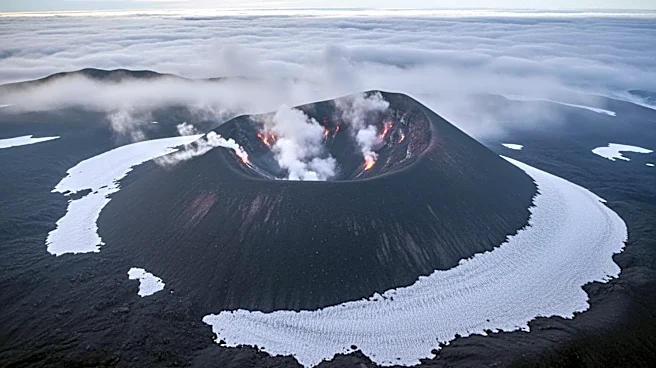
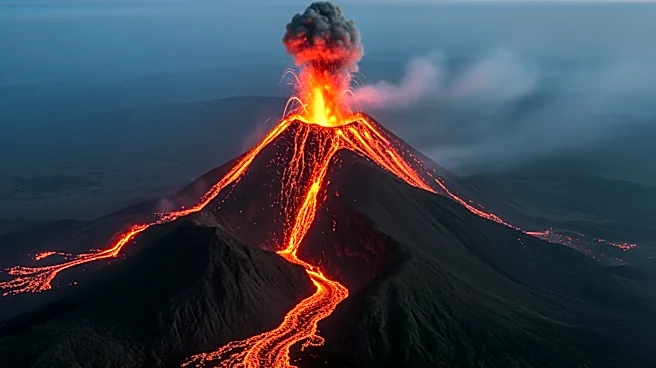
Recent satellite imagery from NASA Earth Observatory has revealed intense volcanic heat escaping from beneath the frozen slopes of Shivelyuch volcano on Russia's Kamchatka Peninsula. The images show growing lava formations and pyroclastic deposits visibly
melting snow, indicating ongoing magma movement beneath the mountain. Shivelyuch is recognized as one of the most persistently active volcanoes globally, with repeated eruptions, collapses, ash plumes, and lava dome growth cycles. The Kamchatka Volcanic Eruption Response Team (KVERT) has observed continued dome growth, suggesting active magma movement. The imagery highlights the volcano's ability to reshape its landscape years after major eruptions, with dark volcanic scars cutting through Kamchatka's frozen landscape.
Why It's Important?
The persistent activity of Shivelyuch volcano poses significant geological and environmental implications. Its continuous eruptions and lava dome growth cycles can lead to sudden collapses and explosive releases of volcanic material, affecting air travel and local ecosystems. The ability to monitor such activity through satellite imagery is crucial for understanding volcanic behavior and mitigating potential hazards. The ongoing magma movement beneath Shivelyuch highlights the importance of monitoring volcanic systems for aviation safety and scientific research. The volcano's regenerative behavior offers a unique opportunity for volcanologists to study lava dome dynamics and long-term eruption cycles.