

What's Happening?
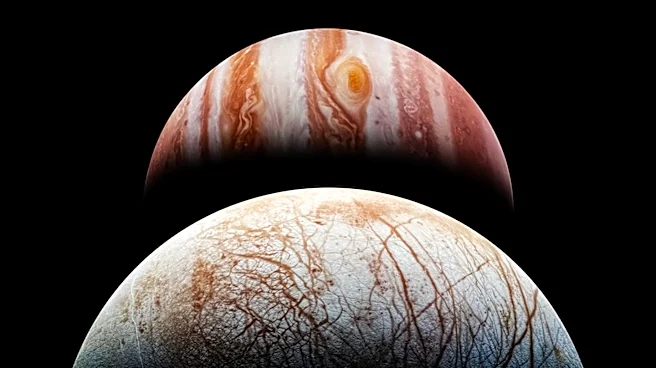
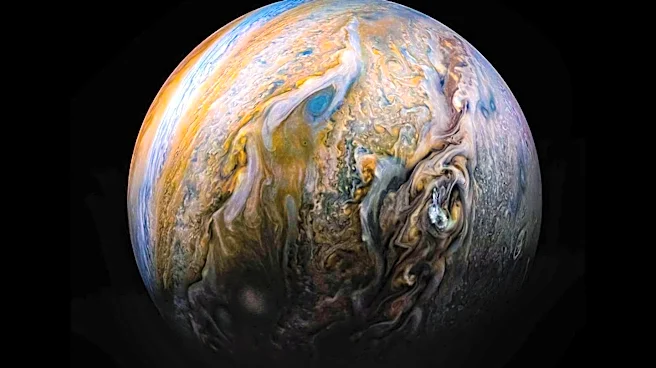
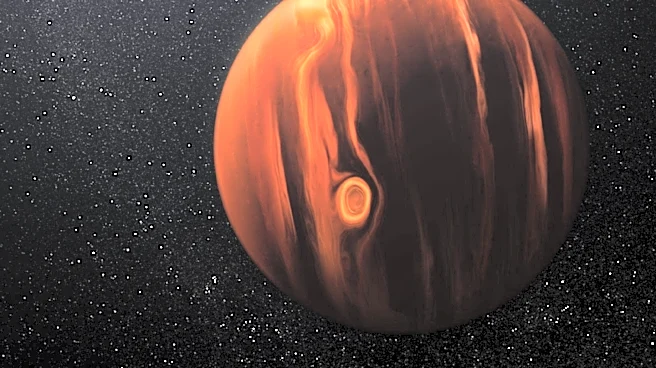
NASA researcher Heidi Becker has been capturing unprecedented images of Jupiter using a low-light detector not originally intended for photography. As a co-lead investigator on NASA's Juno mission, Becker has been able to photograph Jupiter's faint rings,
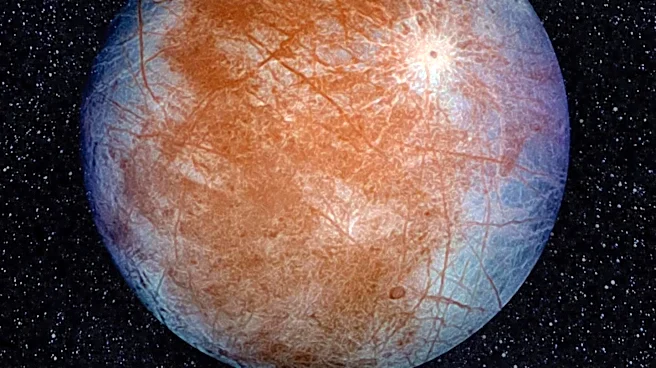
the dark sides of its moons, and new types of lightning. The Juno spacecraft, which arrived at Jupiter in 2016, has been instrumental in providing detailed studies of the planet. Becker's work with the Stellar Reference Unit, a star tracker on Juno, has allowed her to capture images in low-light conditions, revealing features that were previously unseen. These include the planet's rings, which are fed by dust from its inner moons, and mysterious craters on its moons. Her innovative use of the star tracker has also led to the discovery of a new type of lightning on Jupiter, occurring above the water clouds where it is too cold for liquid water to exist.
Why It's Important?
The images captured by Heidi Becker provide new insights into the dynamics of Jupiter's atmosphere and its ring system. Understanding these features is crucial for planetary science as they offer a mini-laboratory for studying planetary and solar system formation. The discovery of a new type of lightning challenges existing theories about Jupiter's atmospheric conditions and could lead to a better understanding of the planet's weather systems. These findings have implications for future missions and studies of Jupiter, as they highlight the complex interactions between the planet's magnetic fields, moons, and atmospheric phenomena. The ability to capture such detailed images in low-light conditions also demonstrates the potential for using similar techniques in other space missions.
What's Next?
Future missions, such as the European Space Agency's JUICE mission, are expected to build on Becker's findings by conducting detailed surveys of Jupiter's moons, particularly Ganymede. These missions will aim to further investigate the mysteries uncovered by Becker's images, such as the origin of the bright clumps of material following Adrastea and the unusual lightning phenomena. Additionally, ongoing campaigns to study Jupiter's auroras using visible light cameras will continue to provide valuable data on the planet's atmospheric chemistry and vertical structure. These efforts will enhance our understanding of Jupiter and contribute to the broader field of planetary science.
Beyond the Headlines
Becker's work highlights the importance of innovative approaches in space exploration. By repurposing a navigation instrument for scientific imaging, she has opened new avenues for research and discovery. This approach underscores the potential for using existing technology in novel ways to overcome challenges in space exploration. The findings also raise questions about the potential for similar phenomena on other gas giants, prompting further investigation into the atmospheric dynamics of planets beyond our solar system. The ethical and scientific implications of these discoveries will likely influence future mission planning and the development of new technologies for space exploration.