
What's Happening?
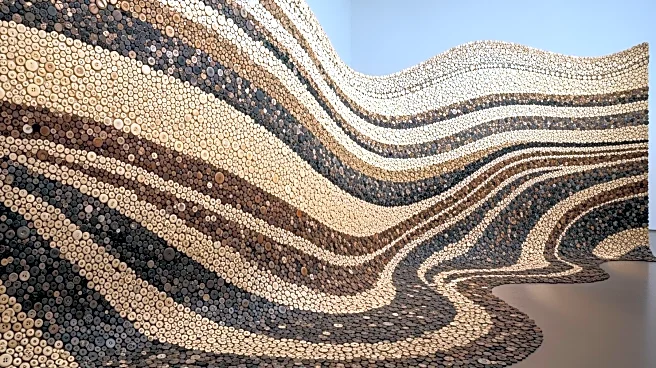
Artist Ai Weiwei has unveiled a new installation titled 'Button Up!' at Factory International in Manchester, England, using 30 tons of salvaged buttons. The installation, which opens on July 2, 2026, features
large-scale works made from buttons and over 3.5 million Lego pieces. The exhibition aims to confront themes of imperial history and industrial capitalism, drawing connections between Britain's industrial past and China's current global position. Ai Weiwei, known for his immersive installations, has created eight flags using traditional Chinese craft techniques, referencing the Eight-Nation Alliance that invaded China in 1900. The installation reflects on the historical and ongoing impacts of globalization and neo-colonialism.
Why It's Important?
Ai Weiwei's installation is significant as it challenges viewers to reconsider the historical forces of imperialism and their modern-day equivalents in globalization. By using ordinary objects like buttons, Ai creates a powerful commentary on the interconnectedness of industrialization, colonial expansion, and economic exploitation. The exhibition not only highlights historical events but also critiques contemporary trade practices and profit-driven capitalism. This work is particularly relevant as it encourages reflection on the ethical implications of globalization and the continued influence of powerful nations over weaker regions.
What's Next?
The exhibition 'Button Up!' will be on display from July 2 to September 6, 2026, at Factory International's Warehouse in Manchester. It is expected to attract significant attention from both art enthusiasts and critics, potentially sparking discussions on the themes of imperialism and globalization. The installation may also influence future art projects and exhibitions that address similar themes, encouraging artists to explore the socio-political dimensions of their work.
Beyond the Headlines
Ai Weiwei's use of buttons, a seemingly mundane object, to create a large-scale installation underscores the artist's ability to transform everyday items into symbols of complex historical narratives. This approach not only makes art accessible but also invites viewers to engage with the deeper meanings behind the materials. The exhibition's focus on traditional Chinese craft techniques highlights the cultural significance of these practices and their role in preserving historical memory.