



What's Happening?
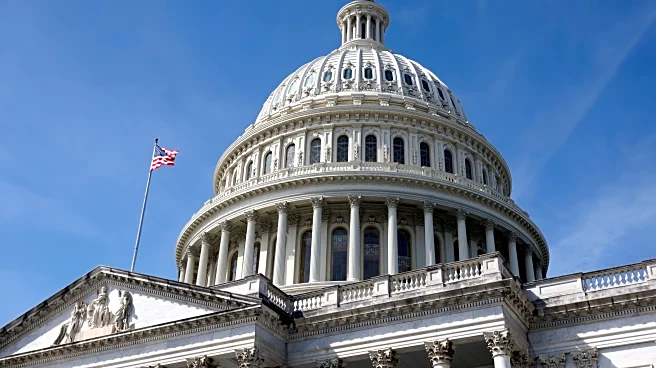
The Department of Homeland Security (DHS) is experiencing the longest partial government shutdown in U.S. history, now entering its sixth week. This shutdown has surpassed the previous record of 43 days. The impasse is primarily due to disagreements over changes
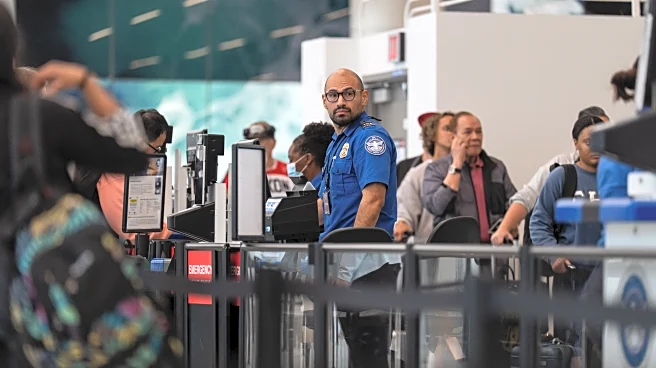
to Immigration and Customs Enforcement (ICE) operations. As a result, the Transportation Security Administration (TSA), funded by DHS, is facing significant operational challenges. Many TSA employees have not reported to work, leading to long lines and delays at major airports. President Trump has signed a memorandum to restore pay to TSA employees, but the source of these funds remains unclear. The shutdown has also led to a significant number of TSA employees quitting due to financial strain.
Why It's Important?
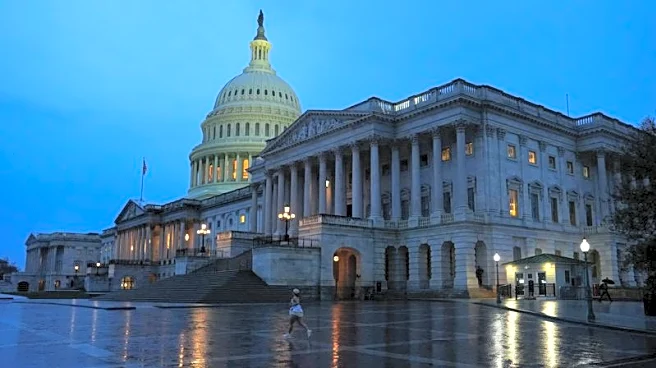
The prolonged shutdown of DHS has significant implications for national security and public safety. With TSA employees not receiving pay, airport security is compromised, potentially affecting millions of travelers. The shutdown also highlights the broader political gridlock in Congress, as lawmakers struggle to reach a consensus on immigration policies. This situation underscores the vulnerability of federal employees who are directly impacted by political stalemates. The economic impact is also notable, as the aviation industry faces operational disruptions, which could lead to financial losses and decreased consumer confidence in air travel.
What's Next?
The resolution of the shutdown remains uncertain, with Congress divided on how to proceed. Lawmakers are under pressure to find a solution, especially with the spring break travel season approaching, which could exacerbate airport congestion. The involvement of ICE in airport security is a temporary measure, and its continuation depends on the return of TSA employees. The political landscape may shift if public pressure mounts on elected officials to resolve the impasse. The potential for a long-term solution hinges on bipartisan cooperation and addressing the underlying issues related to immigration policy.