







What's Happening?
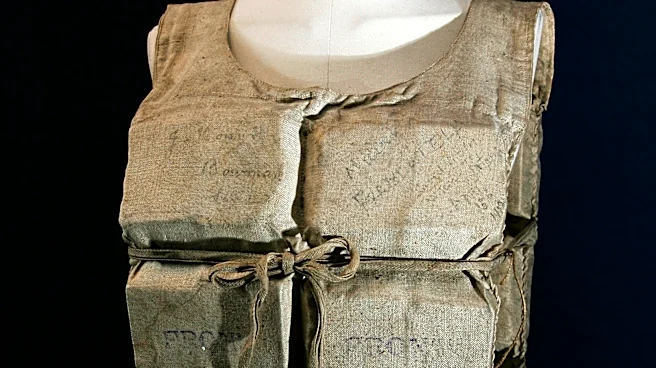
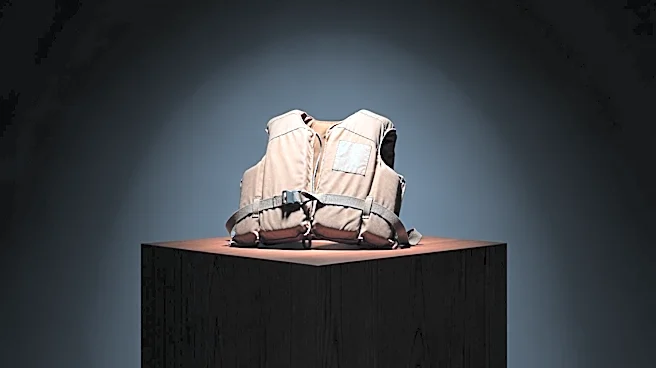
A life jacket worn by Laura Mabel Francatelli, a first-class passenger who survived the sinking of the RMS Titanic, was auctioned for 670,000 pounds ($906,000). The auction took place at Henry Aldridge & Son in Devizes, England, and the life jacket was sold
to an unidentified telephone bidder. This flotation device, signed by Francatelli and other survivors, was the highlight of a Titanic memorabilia sale. The auction also featured a seat cushion from one of the Titanic lifeboats, which sold for 390,000 pounds ($527,000) to the owners of Titanic museums in Pigeon Forge, Tennessee, and Branson, Missouri. The Titanic, which sank on April 15, 1912, after hitting an iceberg, continues to captivate the public due to the diverse range of passengers aboard, from the wealthy to the impoverished.
Why It's Important?
The auction of Titanic memorabilia, particularly items associated with survivors, underscores the enduring public interest in the Titanic disaster. This fascination is partly due to the dramatic nature of the event and the stories of those who survived and perished. The high auction prices reflect a continued respect and curiosity about the historical significance of the Titanic and its passengers. For collectors and historians, these items are not just artifacts but symbols of a pivotal moment in maritime history. The sale also highlights the commercial viability of historical memorabilia, which can attract significant financial interest and investment.
What's Next?
The continued interest in Titanic memorabilia suggests that future auctions may see similar or even higher bids for rare items. Collectors and museums may seek to acquire such artifacts to preserve and display them for educational purposes. The fascination with the Titanic is likely to persist, potentially leading to more exhibitions and media productions that explore the stories of the ship and its passengers. Additionally, the auction results may encourage owners of other historical artifacts to consider selling them, knowing there is a robust market for such items.
Beyond the Headlines
The auction of Titanic memorabilia raises questions about the ethics of profiting from historical tragedies. While these items serve as important historical records, their sale can be seen as commodifying personal stories of loss and survival. This tension between historical preservation and commercial gain is a recurring theme in the auction of artifacts from tragic events. Furthermore, the high prices paid for such items reflect broader societal values and the ways in which history is remembered and monetized.