







What's Happening?
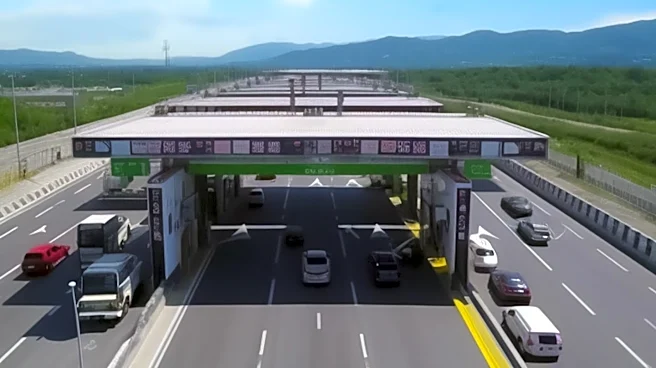
Travelers driving between Ohio and New York face accumulating costs due to the presence of toll roads in both states. Specifically, the Ohio Turnpike and the New York State Thruway are identified as major toll routes. The Ohio Turnpike charges approximately
8.4 cents per mile for passenger vehicles, while rates on the New York State Thruway vary by vehicle class and exit points, typically costing several dollars per segment for passenger cars. These tolls can quickly add up, especially for multi-state journeys. Electronic toll collection systems like E-ZPass are recommended as they can streamline travel and often provide savings compared to cash payments at traditional booths. Planning routes with an awareness of these toll costs is advised to avoid unexpected expenses.
Why It's Important?
The prevalence and cost of toll roads in Ohio and New York have direct financial implications for individuals and businesses engaged in interstate travel. For consumers, these tolls increase the overall cost of road trips, potentially influencing travel decisions or budgets. For businesses, particularly those involved in logistics, transportation, or field services that operate across these states, toll charges represent a significant operational expense that must be factored into pricing and profitability. The varying rates and the need for electronic payment systems also highlight a broader trend in infrastructure funding, where user fees are increasingly relied upon to maintain and develop road networks. This system can create disparities, as those who travel frequently or have less access to electronic payment methods may bear a disproportionately higher cost burden. The emphasis on electronic systems also points to a move away from traditional cash-based transactions, requiring adaptation from all road users.
What's Next?
Travelers planning journeys between Ohio and New York will need to continue to account for toll costs. The use of electronic toll systems like E-ZPass is likely to become even more critical for efficiency and potential cost savings. Drivers should plan their routes carefully, utilizing mapping tools that can estimate toll expenses or offer toll-free alternatives, though these may involve longer travel times. The ongoing maintenance and potential expansion of these toll road networks suggest that these costs will remain a permanent feature of interstate travel in the region. Future developments could include adjustments to toll rates, further integration of electronic payment technologies, or discussions around alternative funding mechanisms for infrastructure, though no immediate changes are indicated.
Beyond the Headlines
The reliance on toll roads in states like Ohio and New York reflects a broader national challenge in funding infrastructure. As federal funding for highways has fluctuated, states have increasingly turned to user-fee models to finance construction, maintenance, and upgrades. While tolls provide a direct revenue stream for specific road projects, they also raise questions about equity and economic impact. For instance, businesses might pass these costs onto consumers, potentially affecting regional competitiveness. Moreover, the shift to cashless systems, while efficient, can create barriers for some users, highlighting the digital divide in access to essential services. The long-term implications involve a continuous balancing act between infrastructure needs, economic burden on travelers and businesses, and the pursuit of equitable access to transportation networks.