








What's Happening?
Iowa Governor Kim Reynolds has signed a proclamation extending the period during which certain agricultural products can be transported overweight without a permit. This proclamation is effective immediately and will continue through December 6, 2026.
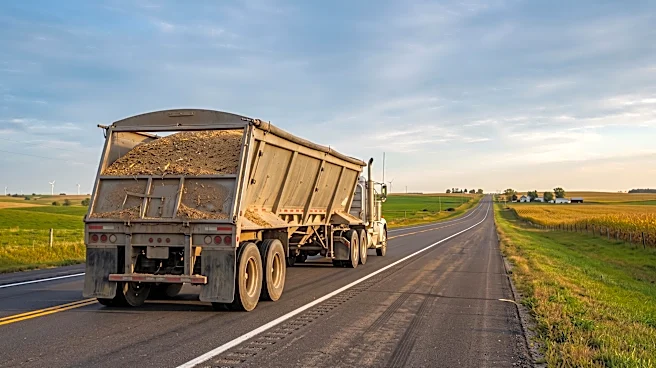
The order specifically allows vehicles transporting corn, soybeans, hay, straw, silage, stover, fertilizer (dry, liquid, and gas), and manure (dry and liquid) to exceed standard weight limits, provided they do not surpass a gross weight of 90,000 pounds. Additionally, the proclamation stipulates that axle weight limits determined under Iowa Code § 321.463 (6) (a)-(b) cannot be exceeded by more than 12.5 percent, and the legal maximum axle weight limit of 20,000 pounds must not be surpassed. These provisions apply to loads transported on all Iowa highways, excluding the interstate system, and require compliance with posted limits on roads and bridges.
Why It's Important?
This extension of the harvest proclamation is crucial for Iowa's agricultural sector, providing significant operational flexibility for farmers and transporters during peak harvest and planting seasons. By allowing overweight transportation of key agricultural commodities and inputs like fertilizer and manure, the proclamation helps to streamline logistics, reduce transportation costs, and improve efficiency for agricultural businesses. This directly impacts the profitability of farmers and the overall supply chain for food production in the state. The ability to move larger quantities of goods per trip can mitigate labor shortages, fuel costs, and equipment wear, ultimately supporting the economic stability of Iowa's dominant agricultural industry. The long-term extension through December 2026 offers predictability and planning advantages for agricultural operations.
What's Next?
The extended harvest proclamation will remain in effect until December 6, 2026, providing consistent regulatory relief for Iowa's agricultural transportation. Farmers and agricultural businesses will continue to operate under these relaxed weight restrictions, which are expected to facilitate the efficient movement of crops and essential farming materials. State agencies, particularly those responsible for transportation and agriculture, will likely monitor the impact of this extended proclamation on road infrastructure and traffic safety. While the proclamation offers a clear framework for the next two years, future considerations might involve assessing its long-term effects on road maintenance and potential adjustments based on agricultural needs or infrastructure demands beyond 2026.
Beyond the Headlines
The repeated and extended issuance of such harvest proclamations highlights a broader trend in agricultural policy: the need to balance regulatory frameworks with the practical demands of modern farming. While intended to support the agricultural industry, these exemptions from standard weight limits could raise questions about their long-term impact on road infrastructure, maintenance costs, and public safety. The state's decision to extend this proclamation for multiple years suggests a recognition of its critical role in sustaining agricultural productivity and economic viability. This approach reflects an ongoing dialogue between state governance and industry needs, potentially influencing similar policy considerations in other agricultural states facing comparable logistical challenges.