



What's Happening?
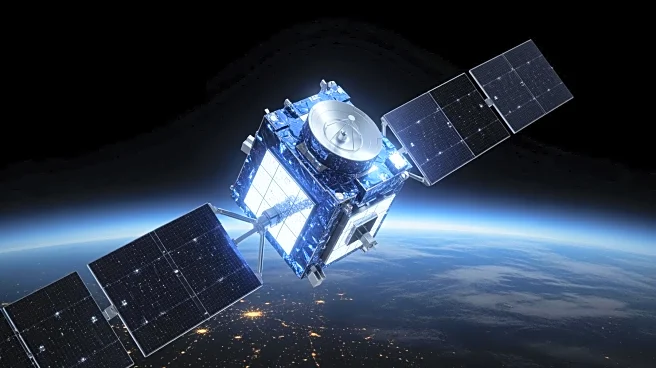
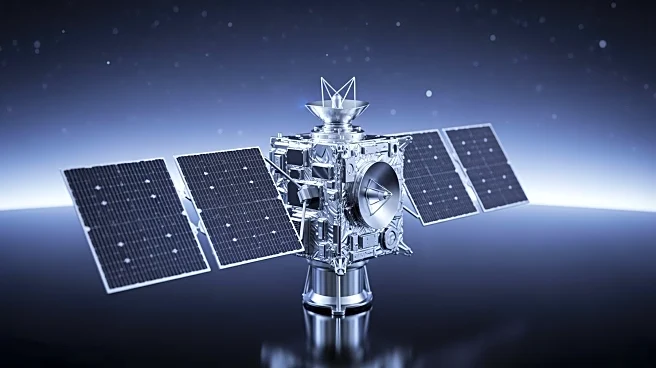
NanoAvionics has signed a multi-million-euro contract with South Korean startup Flexell Space to supply solar arrays for a national security satellite program. The Lithuanian company will design and build deployable solar arrays, which Flexell will validate
and integrate into low Earth orbit satellites developed by Hanwha Systems. This agreement marks a significant step in NanoAvionics' global expansion strategy, particularly in the South Korean market. The collaboration also explores integrating Flexell's solar technology into NanoAvionics' platforms, aiming to reduce costs and enhance scalability. This partnership aligns with South Korea's broader ambitions to strengthen its space capabilities, as evidenced by increased R&D funding and international collaborations.
Why It's Important?
This contract underscores South Korea's commitment to advancing its space industry, with a focus on national security and technological innovation. By partnering with international companies like NanoAvionics, South Korea aims to enhance its satellite capabilities and position itself as a leading space power by 2045. The deal also highlights the growing importance of international cooperation in the space sector, as countries seek to leverage global expertise to achieve strategic objectives. For NanoAvionics, this contract represents an opportunity to expand its market presence and showcase its technological prowess in a competitive industry.
What's Next?
The delivery of the solar arrays is expected in the second half of 2027, with ongoing collaboration between NanoAvionics and Flexell Space. South Korea's space agency, KASA, continues to invest in new technologies, including reusable rockets and lunar spacecraft, to achieve its long-term goals. The success of this project could lead to further partnerships and contracts for NanoAvionics, as South Korea seeks to build a robust space infrastructure. Additionally, South Korea's engagement with international partners, including the U.S., may result in joint projects and shared advancements in space technology.