



What's Happening?
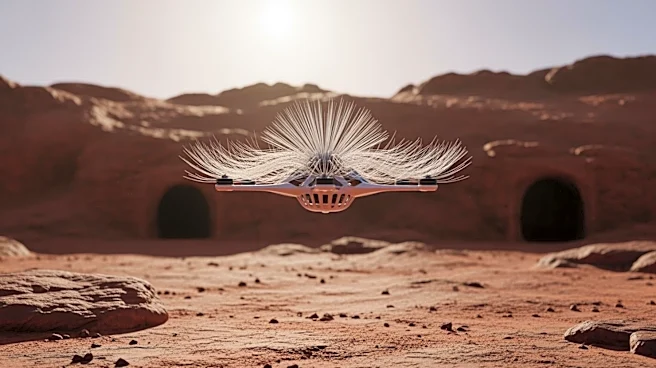
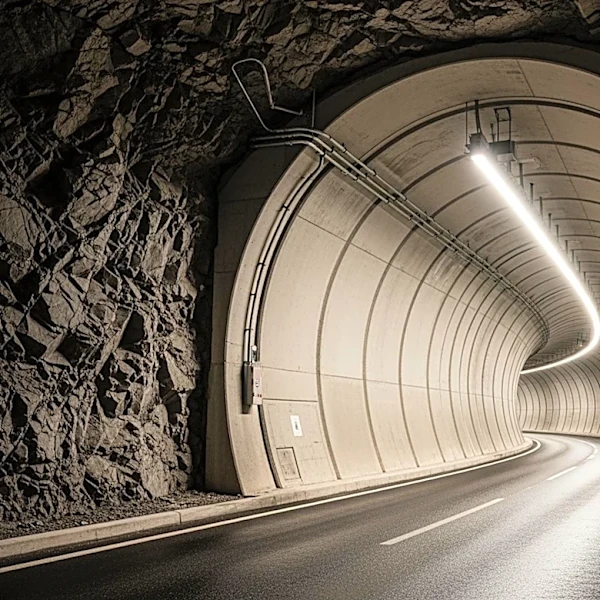
NASA is exploring innovative methods to investigate the extensive tunnel networks on Mars, particularly those formed by ancient volcanic activity. A new concept involves deploying 'dandelion drones' to map these tunnels. The initiative, led by Mostafa
Hassanalian from New Mexico Tech, proposes using a 'roly-poly robot' to release thousands of small drones into the tunnels. These drones, inspired by the natural dispersal of dandelion seeds, would be carried by Mars' winds to gather data on the tunnel systems. The project aims to overcome the limitations of current Mars rovers, which are too large to enter these tunnels. The drones are designed to operate using piezoelectricity, as solar power is ineffective in the dark tunnels.
Why It's Important?
This development is significant as it represents a potential breakthrough in Mars exploration, allowing scientists to gather detailed information about the planet's subsurface structures. Understanding these tunnels could provide insights into Mars' geological history and assess the potential for past or present life. The success of this project could also pave the way for future human habitation, as these tunnels might offer protection from harsh surface conditions. Additionally, the use of biomimicry in drone design highlights a growing trend in robotics, where natural processes inspire technological advancements.
What's Next?
The next steps involve testing the feasibility of the 'dandelion drones' in environments that simulate Martian conditions. Researchers will need to ensure that the drones can effectively navigate and transmit data from the tunnels. If successful, this technology could be included in future Mars missions, potentially as early as the 2030s when human exploration of Mars is anticipated. NASA is also considering similar exploration techniques for other celestial bodies, such as Titan, Saturn's largest moon.
Beyond the Headlines
The use of 'dandelion drones' could revolutionize space exploration by providing a cost-effective and efficient method for mapping and studying extraterrestrial environments. This approach could lead to new discoveries about the potential for life beyond Earth and inform strategies for future space colonization. The project also underscores the importance of interdisciplinary collaboration, combining expertise in robotics, aerodynamics, and planetary science to address complex challenges in space exploration.