



What's Happening?
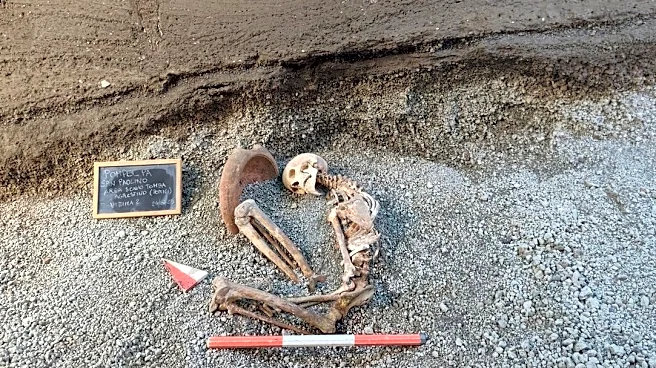
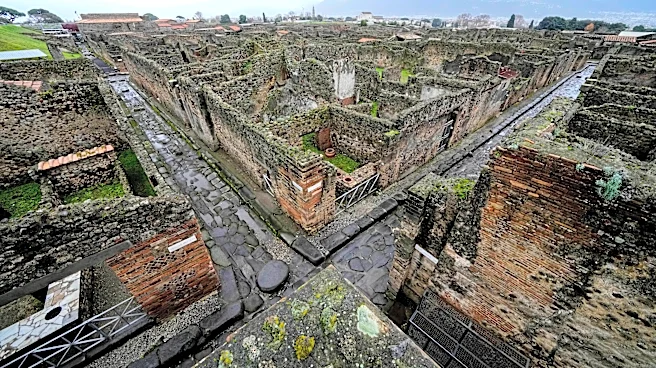
Researchers at the Pompeii Archaeological Park, in collaboration with the University of Padua, have used artificial intelligence to create a digital portrait of a victim from the AD 79 eruption of Mount Vesuvius. The portrait, based on skeletal remains
found outside Pompeii's city walls, depicts a man using a terracotta mortar as a shield against falling debris. This reconstruction aligns with historical accounts of Pompeii residents using objects for protection during the disaster. The project aims to make archaeological research more accessible and emotionally engaging for the public, while maintaining scientific accuracy.
Why It's Important?
The use of AI in archaeology represents a significant advancement in how historical data is analyzed and presented. By creating digital reconstructions, researchers can offer the public a more tangible connection to historical events, enhancing educational and cultural understanding. This approach also demonstrates the potential of AI to revolutionize classical studies by providing new methods for interpreting vast archaeological datasets. The project underscores the importance of integrating technology with traditional research to preserve and enhance cultural heritage.
What's Next?
The ongoing project will likely continue to produce digital reconstructions of other archaeological finds, potentially expanding to different sites and historical periods. This could lead to a broader application of AI in archaeology, offering new insights into ancient civilizations. The success of this project may encourage other archaeological sites to adopt similar technologies, fostering a more interactive and engaging approach to historical research.